

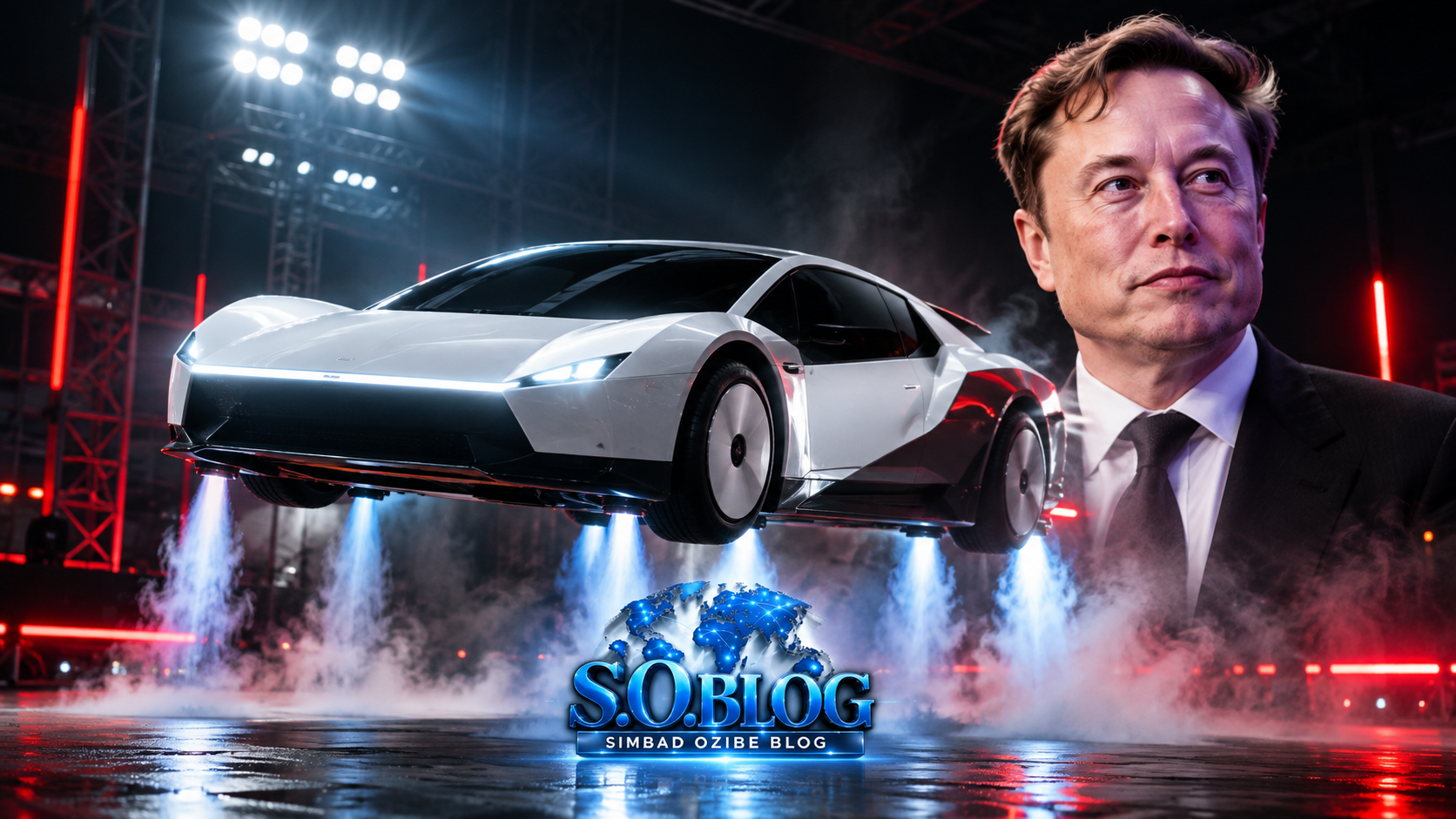
Tesla has unveiled a redesigned next-generation Roadster featuring rocket-style thrusters developed in collaboration with SpaceX, showcasing aerial manoeuvres at a demonstration in Texas. The company says production is planned for 2028, although the vehicle’s eventual price, regulatory status and practical flying capabilities remain important unanswered questions.
The October 15, 2026, presentation brought renewed attention to a project first introduced in 2017. The latest demonstration showed the two-seat electric sports car performing unusual manoeuvres using a suction-assisted system and built-in thrusters, according to Reuters’ report on the unveiling.
What Tesla Demonstrated
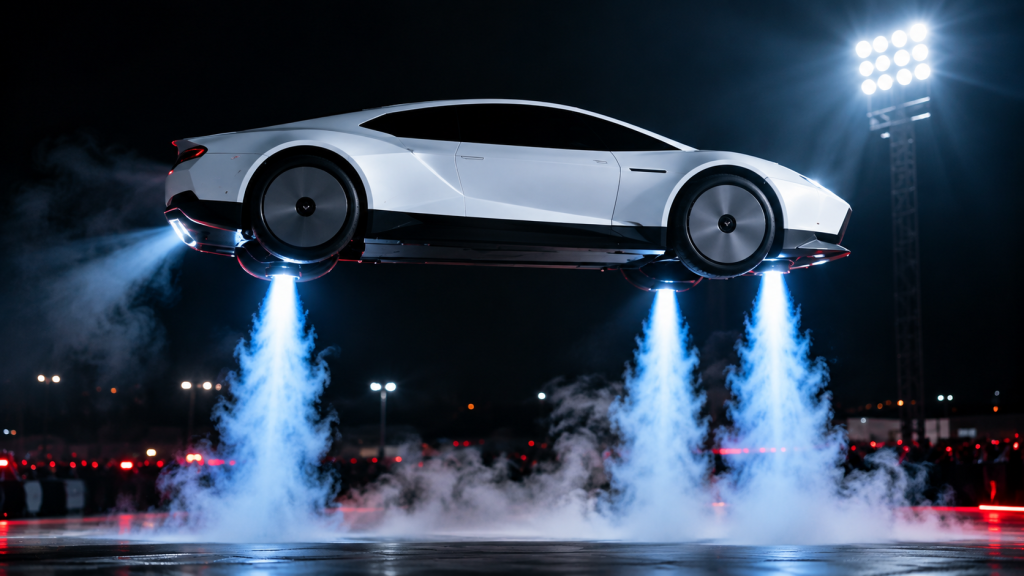
The event took place at a SpaceX test facility in McGregor, Texas. The redesigned Roadster was shown travelling along an inverted ramp using a suction system, turning in the air and returning to the ground with the help of thrusters. Later demonstrations showed it leaping over other vehicles.
The display was designed to showcase the unusual engineering being pursued by Tesla and SpaceX. However, a controlled demonstration of aerial manoeuvres does not establish that the vehicle can operate as a conventional flying car in everyday conditions.
TechCrunch’s coverage of the demonstration also describes the combination of fans and thrusters used in the presentation.
Stay Ahead of the Story. Never Miss a Global Update.
Subscribe to our newsletter!
How the SpaceX Thrusters Fit Into the Roadster
Tesla’s collaboration with SpaceX brings rocket-related technology into the design of a high-performance electric sports car. Elon Musk had discussed the possibility of a thruster-equipped Roadster as far back as 2018, when he proposed a SpaceX option package for the vehicle.
The new demonstration brings that long-running idea closer to a physical showcase. Yet important engineering details remain unclear, including how the system would operate under ordinary driving conditions, what limitations would apply, and how the technology would be certified for use.
The thruster-equipped vehicle should therefore be understood as a specialised performance concept, rather than evidence that Tesla has developed a road car capable of unrestricted flight.
Tesla Roadster: Performance Claims and Production Plans
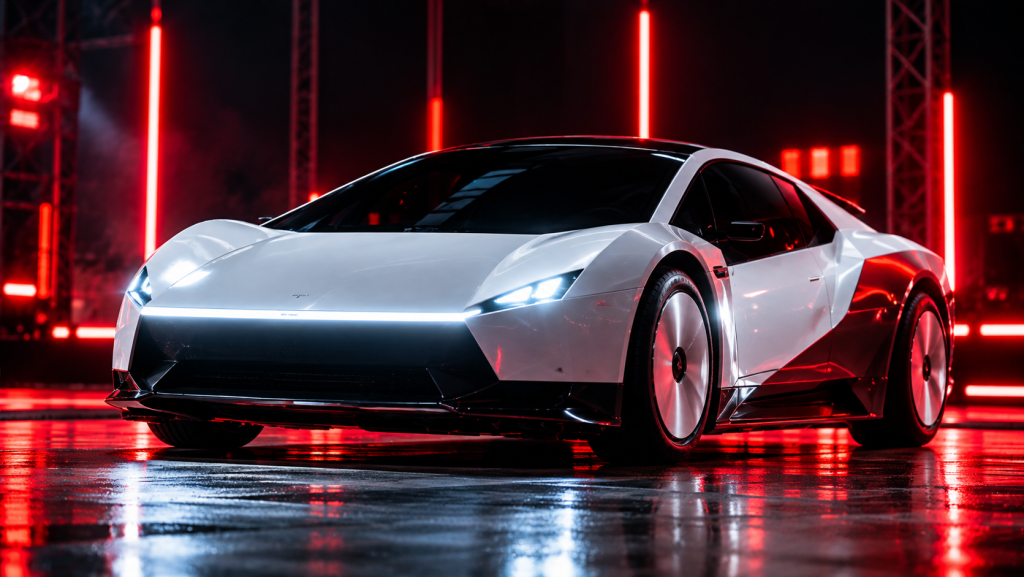
During the unveiling, Tesla vehicle engineering chief Lars Moravy said the Roadster could accelerate from zero to 60 miles per hour in less than one second and reach a top speed exceeding 230 mph. Tesla also cited a range of more than 300 miles on a single charge, according to Reuters.
These are company-reported specifications and should not be confused with independently verified performance results across production vehicles.
Tesla says production is planned to begin in 2028. The date is significant because the second-generation Roadster has experienced years of delays since its initial announcement in 2017, when the company originally expected deliveries to begin in 2020.
The company has not disclosed a final price for the newly unveiled vehicle. Reuters reported that Tesla’s reservation page showed a $50,000 deposit for a Performance version and a $250,000 deposit for a Thrust version. A Rocket version was described as an invitation-only, single-seat model with a full flight system. These deposits are not the final purchase prices.
Is Tesla’s Roadster Really a Flying Car?
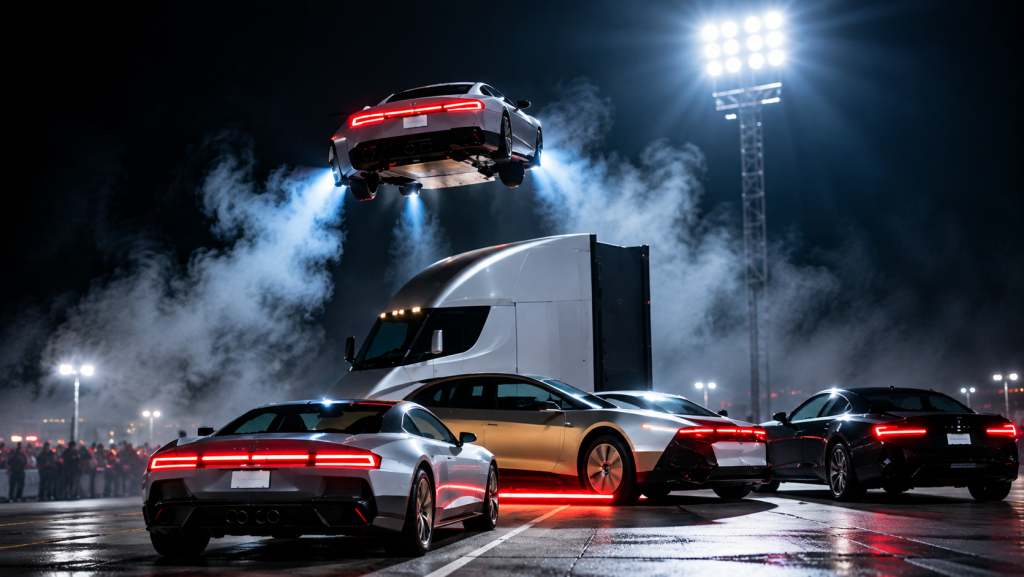
The demonstration raises an important distinction between a vehicle that can briefly leave the ground under controlled conditions and an aircraft capable of routine flight.
Conventional flying-car projects typically involve aircraft-like systems designed for take-off, sustained flight and landing. Tesla’s Roadster demonstration instead centred on short aerial manoeuvres using thrusters and a suction-assisted system. Publicly available information does not yet establish that the Roadster can transport occupants through the air in the manner of an aircraft.
Regulatory approval is another major hurdle. WIRED’s analysis of the Roadster’s aviation implications explains that a vehicle operating in the air could face aviation certification, airspace and pilot-licensing requirements, as well as restrictions on where it can take off and land.
Elon Musk also acknowledged at the event that the vehicle might not be legal in every jurisdiction and described it as not necessarily optimised for safety. Those comments underline why the demonstration should not be interpreted as approval for consumers to fly the car on public roads.
What the Unveiling Means for Tesla
The Roadster gives Tesla a high-profile technology showcase at a time when the company is placing increasing emphasis on autonomous driving, robotics and artificial intelligence. Its unusual engineering could reinforce Tesla’s image as a company willing to pursue ambitious vehicle concepts.
However, the commercial significance of the Roadster remains uncertain. Its premium positioning, the absence of a disclosed final price and the long history of production delays make it too early to determine how much it could contribute to Tesla’s business.
The collaboration also highlights the overlap between Tesla’s electric-vehicle engineering and SpaceX’s expertise in propulsion systems. Whether that overlap results in a commercially practical vehicle will depend on engineering development, safety, regulatory approvals and production execution.
What Happens Next?
The next major milestones will be whether Tesla can turn the demonstration vehicle into a production-ready model, confirm final specifications and pricing, and clarify which versions can legally be used on public roads. The proposed 2028 production start remains a company target rather than a guarantee of customer deliveries by that date.
For now, the unveiling marks an extraordinary demonstration of vehicle engineering, but it does not mean flying cars are ready to become a normal part of daily transport.
The Bottom Line
Tesla has revealed a Roadster that uses SpaceX-related thruster technology to perform brief aerial manoeuvres, placing the project in a category beyond conventional electric sports cars. Yet the distinction between a dramatic demonstration and a practical, approved flying vehicle remains crucial.
Production is planned for 2028, but consumers still need clearer answers on pricing, safety, certification and real-world capability before the Roadster can be judged as a viable flying car.
What do you think? Would you consider a car with rocket-style thrusters if it became available, or should flying technology remain separate from everyday road vehicles? Share your thoughts in the comments.
Stay informed with Simbad Ozibe Blog. Follow our coverage for more global news, technology, business and innovation stories.
Subscribe to the Simbad Ozibe Blog newsletter for more stories from around the world.
Watch Now!
Stay Ahead. Stay Informed.

Get the latest stories, insights and updates from Simbad Ozibe Blog — covering News, Technology, Business, Finance, Travel, Gaming, Entertainment and more.
Join our growing community and never miss a story worth knowing.