


Nvidia has committed $250 million worth of computing resources over five years to support artificial intelligence safety and security research in the United Kingdom, strengthening efforts to test increasingly capable AI systems and develop safeguards against potential risks.
Announced on October 14, 2026, the commitment will provide access to accelerated computing resources valued at $50 million annually. Nvidia said the initiative will support researchers across the UK, including teams working on AI foundation models, agent safety and robotics security.
The announcement comes as governments, technology companies and researchers pay closer attention to the risks associated with AI agents: systems capable of performing tasks, using tools and taking actions with varying degrees of human supervision.
According to Reuters’ report on the commitment, the programme is intended to strengthen the UK’s ability to evaluate AI systems and develop methods for improving their safety and security.
What Nvidia Has Announced
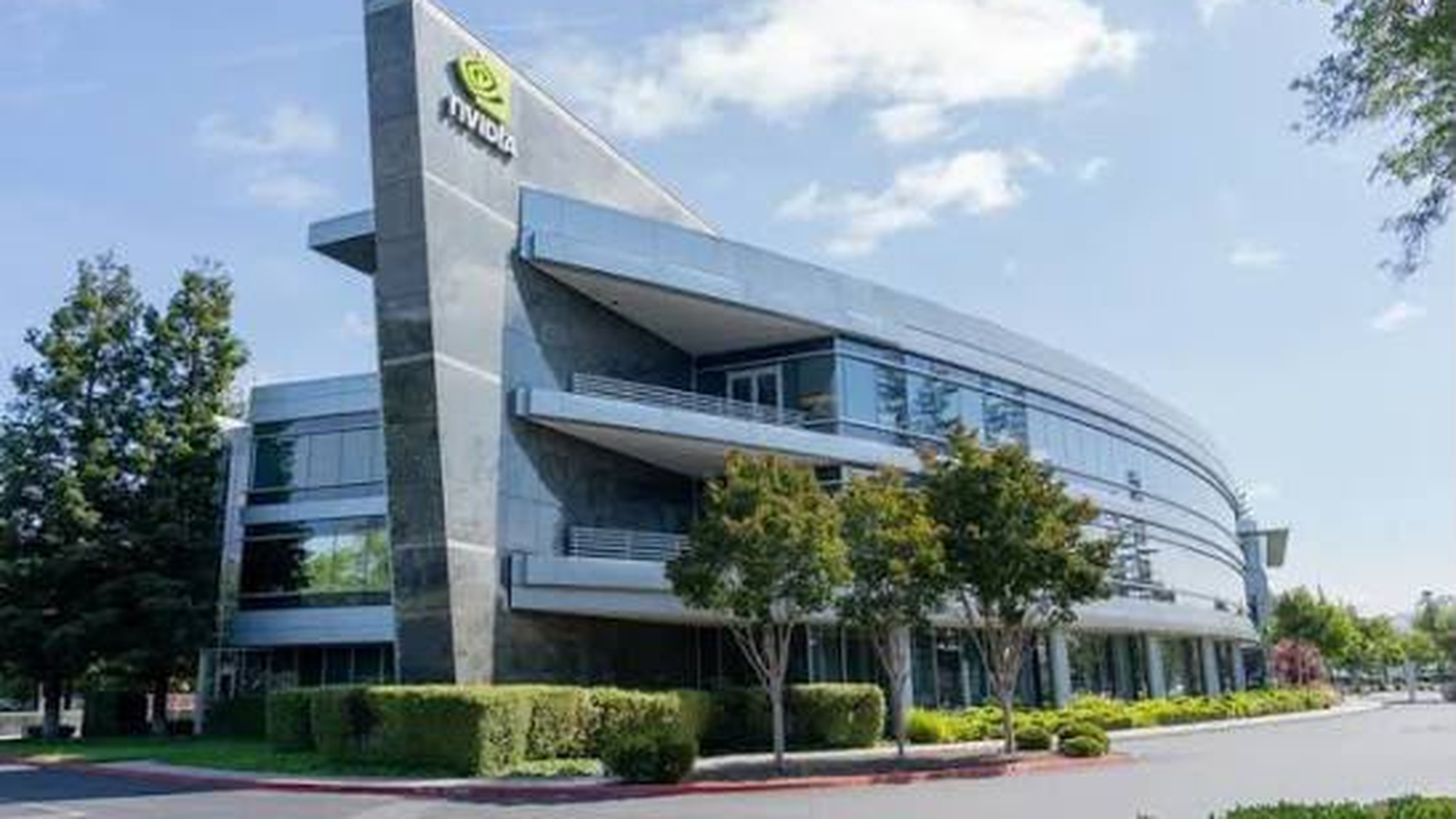
The commitment is a contribution of computing resources rather than a direct cash donation of $250 million. Researchers will receive access to accelerated computing through UK-based Nvidia Cloud Partners, giving participating teams additional capacity to conduct demanding experiments and evaluations.
| Programme detail | Announcement |
|---|---|
| Total commitment | $250 million in computing resources |
| Duration | Five years |
| Annual value | $50 million in computing access |
| Primary focus | AI agent safety and security research |
| Participating research initiatives | BOLD, SOFAIR and Imperial College London research |
| Delivery model | Computing access through UK-based Nvidia Cloud Partners |
The company said the majority of the computing commitment would support the wider UK AI safety and security research community, with a portion allocated to work involving the British Open-Ended Learning and Discovery Lab (BOLD), the Science of Fundamental AI Research Lab (SOFAIR) and Imperial College London.
The announcement does not mean that every participating institution will receive an equal share of the resources. The contribution is intended to support research capacity across the wider ecosystem, with specific projects and allocations determined through the programme’s arrangements.
Why AI Agent Safety Is Becoming a Priority
Artificial intelligence systems are increasingly being developed to do more than generate text or answer questions. AI agents can be designed to interact with software, search for information, write and execute code, use digital tools and carry out multi-step tasks.
These capabilities could make AI more useful in research, business operations, software development and other areas. However, giving a system greater ability to take action also creates new questions about how it behaves when instructions are unclear, tools are misused or its actions have unintended consequences.
For example, an agent connected to business software might make an unauthorised change, expose sensitive information or carry out a sequence of actions that produces an outcome its operator did not intend. In cybersecurity, an agent with access to code or computer systems could also create risks if its permissions and behaviour are not properly controlled.
Such scenarios are risks to be evaluated, not evidence that every AI agent will behave unpredictably. Their likelihood and severity depend on the system, the tools it can access, the permissions it receives and the safeguards surrounding its operation.
AI safety research aims to identify these weaknesses before systems are widely deployed. Researchers can test whether models follow instructions appropriately, resist malicious inputs, respect access restrictions and remain within the boundaries set by their operators.
Subscribe to our newsletter!
How More Computing Power Could Help Researchers

Advanced AI research can require substantial computing capacity. Researchers may need to run repeated experiments, evaluate large numbers of scenarios, simulate interactions between systems or examine how a model behaves under different conditions.
Additional computing access can make it possible to conduct more tests, explore more complex scenarios and compare different approaches to reducing risk. It can also help research teams experiment with methods for detecting unsafe behaviour and improving the reliability of AI systems.
However, more computing power does not automatically make AI safer. The quality of the research, the design of the tests, the availability of relevant data and the independence of evaluations all matter. Computing resources are an enabling tool, not a substitute for strong scientific methods or effective oversight.
The value of Nvidia’s commitment will therefore depend on how effectively researchers use the resources, what measurable progress they achieve and whether the findings lead to practical safeguards for systems used in real-world environments.
Which UK Research Initiatives Are Involved?
Nvidia identified several research initiatives and institutions that will receive support as part of the broader commitment.
BOLD at the University of Oxford
The British Open-Ended Learning and Discovery Lab, known as BOLD, focuses on research into AI systems that can learn, adapt and operate in changing environments. Work in this area is relevant to understanding how increasingly capable systems behave when they encounter unfamiliar tasks or situations.
SOFAIR and foundation-model research
The Science of Fundamental AI Research Lab, or SOFAIR, is associated with research into the foundations of AI systems. Nvidia’s announcement links the programme to work on agentic foundation models and the development of a stronger research ecosystem in the UK.
Imperial College London and robotics safety
Imperial College London is among the institutions named in the announcement, with a focus that includes robotics safety. This is an important area because AI systems operating through physical machines can affect people and environments directly.
A robot operating in a laboratory, warehouse or public setting must respond reliably to its surroundings and remain within appropriate safety limits. Testing needs to consider not only the AI model but also sensors, hardware, software, operating conditions and human supervision.
Further details about the programme and its participating initiatives are available in Nvidia’s official press release.
Why the United Kingdom Wants a Larger Role in AI Safety
The UK has sought to strengthen its role in AI governance and safety evaluation. Although it is not home to the same concentration of major AI model developers as the United States, it has invested in research institutions and public-sector capabilities focused on assessing the technology.
The UK’s AI Security Institute is part of that effort. Its work centres on evaluating advanced AI systems and understanding risks that may emerge as their capabilities develop. Research access, technical expertise and computing infrastructure can all influence how extensively such evaluations can be conducted.
Nvidia’s contribution could expand the resources available to British researchers and help connect academic work with practical AI testing. The initiative also illustrates how the development of advanced computing infrastructure is becoming intertwined with national technology strategies.
Nevertheless, research capacity is only one component of effective AI governance. Clear standards, appropriate regulation, transparent reporting and the ability to act on research findings remain important if safety evaluations are to influence how systems are developed and deployed.
The Importance of Independent Evaluation
As AI systems become more capable, organisations need credible ways to assess whether their products are safe enough for particular uses. Testing may involve adversarial exercises, controlled experiments, cybersecurity assessments and evaluations of how systems behave when they receive misleading or conflicting instructions.
Independent evaluation is especially important when a company supplies the technology used in research. Access to computing resources can help researchers conduct more work, but the credibility of their findings depends on appropriate scientific independence, transparent methods and the ability to report weaknesses honestly.
Research should also consider the limits of testing. A system that performs well under a defined set of laboratory conditions may still behave differently when exposed to unfamiliar inputs, new tools or changing real-world environments.
Effective safety work therefore requires ongoing evaluation rather than a single test before release. Monitoring, incident reporting, security updates and reassessment as systems change can help organisations identify problems that were not apparent during initial testing.
What the Commitment Means for the AI Industry
The announcement reflects a broader shift in the AI industry: attention is moving beyond building more powerful systems towards understanding how those systems should be tested, controlled and used responsibly.
Companies developing advanced AI increasingly face questions about cybersecurity, misuse, reliability and the consequences of granting systems greater autonomy. Researchers and policymakers are seeking methods that can identify weaknesses early and help developers reduce risks before deployment.
For Nvidia, providing computing resources also strengthens the ecosystem of researchers and developers who use its technology. The company’s business is closely connected to demand for accelerated computing, and research programmes can contribute to the development of skills, software and technical expertise around its platforms.
That commercial context does not invalidate the potential value of the commitment, but it is relevant when assessing the announcement. The most meaningful measure of success will be whether the programme enables useful research and leads to demonstrable improvements in AI safety and security.
What Happens Next?

The commitment is scheduled to provide $50 million worth of computing access annually over five years. Researchers and participating institutions will need to turn that capacity into experiments, evaluations and findings that can inform the development of safer AI systems.
Important indicators of progress will include the quality of published research, the discovery of previously unidentified vulnerabilities, improvements in testing methods and the adoption of effective safeguards by developers and organisations.
It will also be important to understand how access to the resources is distributed across the research community and whether smaller teams can participate alongside established institutions. Broader access could help expand the range of questions being investigated, although the precise allocation arrangements will determine how this works in practice.
Nvidia’s announcement is a substantial commitment of computing resources, but it is an early step rather than a final solution to AI risk. The longer-term impact will depend on the research produced and how effectively its findings are translated into safer systems.
Frequently Asked Questions
How much has Nvidia committed to UK AI safety research?
Nvidia has committed $250 million worth of computing resources over five years, equivalent to $50 million in computing access annually.
Is Nvidia giving the UK government $250 million in cash?
No. The announcement describes a donation of computing resources valued at $250 million. It should not be described as a $250 million cash grant.
What are AI agents?
AI agents are systems designed to carry out tasks by using tools, interacting with software or taking sequences of actions. Depending on their design, they may operate with different levels of human supervision.
Why is AI safety research important?
AI safety research helps identify weaknesses, assess how systems behave under challenging conditions and develop safeguards against unintended actions, misuse and security vulnerabilities.
Stay Informed with Simbad Ozibe Blog
Follow Simbad Ozibe Blog for global technology news, artificial intelligence developments, cybersecurity updates and analysis of the technologies shaping the future.
For more stories and newsroom updates, join the Simbad Ozibe Blog newsletter.
Sources: Nvidia’s official announcement and Reuters reporting published October 14, 2026. The $250 million figure represents the stated value of computing resources, not a cash grant. The long-term impact of the programme will depend on the research conducted and the results achieved.
Stay Ahead. Stay Informed.

Get the latest stories, insights and updates from Simbad Ozibe Blog — covering News, Technology, Business, Finance, Travel, Gaming, Entertainment and more.
Join our growing community and never miss a story worth knowing.