

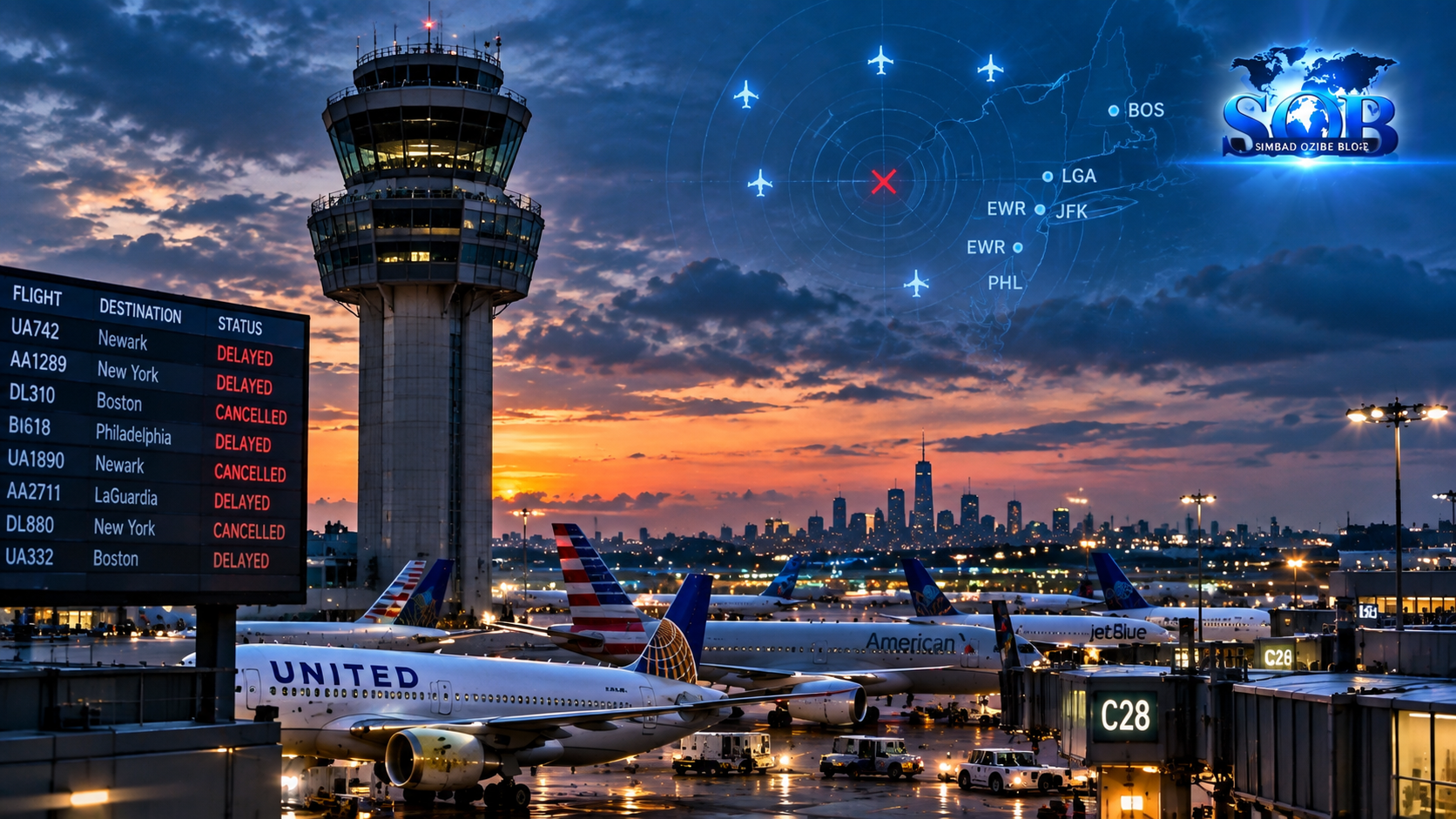
A communications failure inside the U.S. air-traffic control system turned a technical problem in New Jersey into a nationwide aviation disruption, grounding or delaying thousands of flights and exposing the vulnerabilities of infrastructure that millions of passengers depend on every day.
The disruption began on September 21, 2026, after a telecommunications line used by the Federal Aviation Administration (FAA) was damaged in New Jersey. The failure affected a critical air-traffic facility in Philadelphia and forced the FAA to halt or restrict incoming flights at several major airports across the U.S. Northeast.
By the time operations began returning to normal, FlightAware was reporting roughly 7,000 delayed or cancelled flights, while later estimates placed the total disruption at about 9,500 flights.
How a Single Communications Failure Spread Across the Northeast
The immediate problem was not an aircraft malfunction or a failure at an individual airport. It was a communications problem affecting the system used to coordinate aircraft movements through a large section of airspace.
According to the FAA, a primary communications circuit at Philadelphia Terminal Radar Approach Control failed. When the system attempted to switch to its backup, authorities discovered that a backup fibre-optic line had also been damaged.
That combination removed the redundancy designed to keep air-traffic operations functioning when one communications route becomes unavailable.
The result was a chain reaction.
Arrivals were halted or restricted at Newark Liberty International Airport, John F. Kennedy International Airport, LaGuardia Airport, Philadelphia International Airport and Boston Logan International Airport, while more than 100 flights were diverted elsewhere.
Why Newark Became One of the Biggest Pressure Points
Newark was particularly affected because it is a major hub for United Airlines. More than half of its flights were cancelled during the disruption, according to Reuters, adding another layer of complexity as airlines attempted to reposition aircraft and crews.
When a major hub stops accepting arrivals, the effects rarely remain confined to that airport. Aircraft that cannot land may have to divert, crews can reach their legal operating limits, connecting passengers miss onward flights, and aircraft can end up in locations where they were never scheduled to spend the night.
That is how an infrastructure problem affecting one part of an aviation network can quickly become a passenger problem hundreds or even thousands of kilometres away.
The Bigger Problem: An Aging Air-Traffic Network
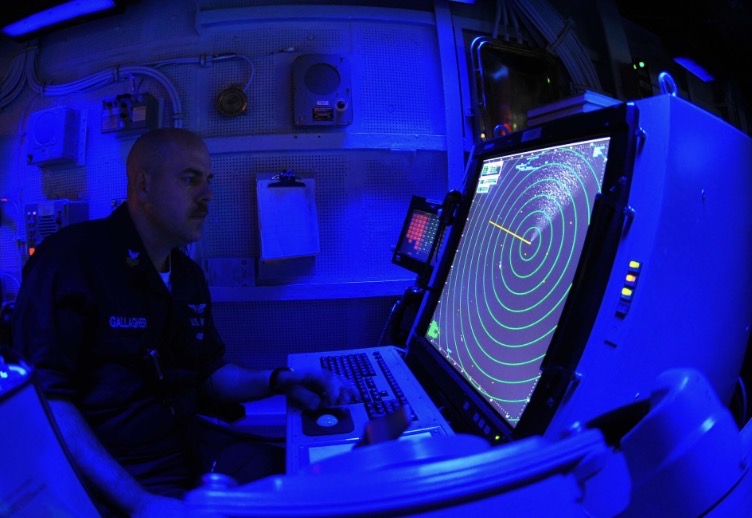
The incident has renewed attention on the condition of America’s air-traffic control infrastructure.
The United States has already allocated $12.5 billion for air-traffic control upgrades, but the latest disruption demonstrated that modernization is not simply about replacing old computers. Communications architecture, redundancy and the ability to reroute critical connections are equally important.
U.S. Transportation Secretary Sean Duffy said the new architecture being developed for the system is intended to eliminate single and dual points of failure by providing multiple telecommunications routes into FAA facilities.
The FAA has also said outdated copper telecommunications wiring across its system is being replaced as part of the modernization effort.
Why Redundancy Matters in Aviation
Modern aviation depends on layers of interconnected technology.
Aircraft have sophisticated navigation systems, airports rely on automated processing, airlines operate massive scheduling networks and air-traffic controllers coordinate aircraft through an increasingly complex airspace.
But the basic principle remains simple: critical systems must continue operating even when one component fails.
The September 21 disruption demonstrated what happens when two communication paths fail at the same time.
For passengers, that can translate into cancelled flights, missed connections, diversions, airport congestion and hours of uncertainty.
Aviation Is Moving Toward a More Resilient Architecture
The U.S. government says the new air-traffic control architecture will use multiple telecommunications routes and remove critical single points of failure.
The Transportation Department and FAA are also introducing more advanced traffic-management technology designed to help identify congestion and other pressure points earlier.
The objective is not simply to make air-traffic control faster. It is to make the system more resilient when something goes wrong.
What the Disruption Means for the Future of Flying
The episode is a reminder that aviation’s visible technology—the aircraft, airport terminals and passenger apps—is only one part of the system.
Behind every flight is a communications and coordination infrastructure that must operate continuously. When that infrastructure fails, the consequences can spread rapidly through an interconnected network.
The latest disruption therefore leaves the United States with a straightforward modernization challenge: build an air-traffic system capable not only of handling normal operations, but also of continuing safely when individual components fail.
For travellers, the immediate disruption has largely passed. The larger question is whether the infrastructure upgrades now being pursued can prevent the next technical failure from becoming another nationwide aviation problem.
Subscribe to the S.O.B. newsletter for more global stories, explainers and developments that matter.
Recommend videos!
Stay Ahead. Stay Informed.

Get the latest stories, insights and updates from Simbad Ozibe Blog — covering News, Technology, Business, Finance, Travel, Gaming, Entertainment and more.
Join our growing community and never miss a story worth knowing.