

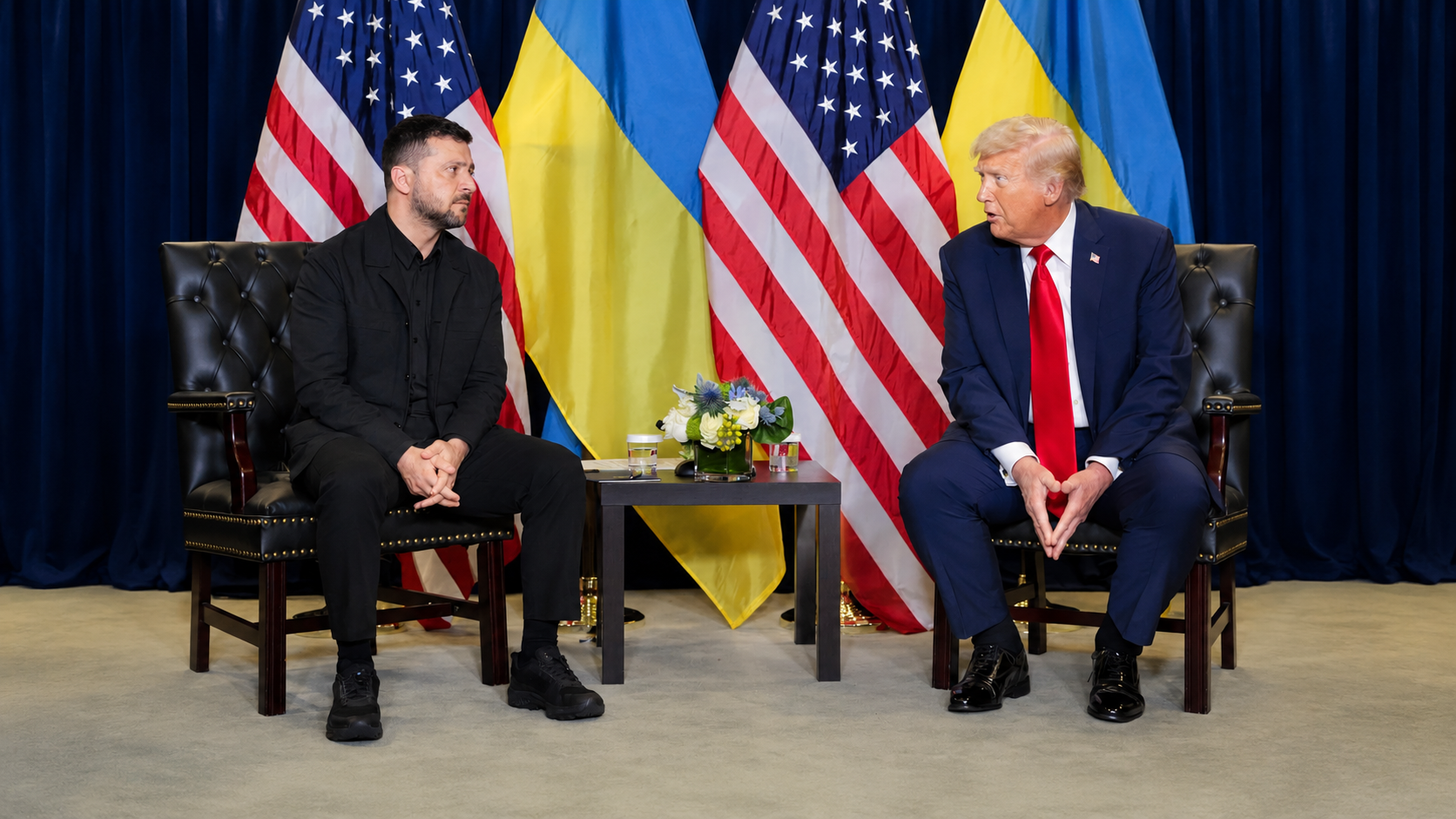
The growing dispute between United States President Donald Trump and Ukrainian President Volodymyr Zelenskyy has entered a consequential new phase after Washington paused a major package of Russia-related sanctions, raising fresh concerns about Ukraine’s security as Russian attacks on its energy infrastructure intensify ahead of winter.
The decision, announced on Friday, October 16, has added to tensions over American support for Kyiv, including concerns about intelligence-sharing, military assistance and access to satellite communications used by Ukrainian forces. Zelenskyy has warned that easing pressure on Moscow could encourage further Russian attacks, while Trump says he wants the war to end.
The immediate question is no longer simply whether the two presidents can maintain a workable relationship. It is whether their widening disagreement will affect Ukraine’s ability to defend its cities, protect critical infrastructure and negotiate from a position of strength. Reuters reported on October 17 that the dispute has raised concerns about the future of vital American support.
Why Trump’s Russia Sanctions Decision Matters
At the centre of the latest dispute is the Trump administration’s decision to waive key sanctions and tariffs associated with the Lindsey Graham sanctions legislation. The measures were designed to increase economic pressure on Russia and target parts of its export economy, including energy-related trade.
Trump’s executive action cited US national interests. However, the decision prompted criticism from lawmakers in both parties, some of whom argued that relaxing the proposed restrictions could undermine efforts to make Russia pay an economic price for its full-scale invasion of Ukraine.
According to The Washington Post’s October 17 report, the waiver drew criticism from Republican and Democratic lawmakers. Russian officials, meanwhile, welcomed the move as an opportunity for improved economic relations with Washington.
The distinction is important: the decision does not, by itself, establish that every existing US restriction on Russia has been removed. It does, however, signal a change in the administration’s approach to particular sanctions and raises questions about the consistency of Washington’s economic pressure on Moscow.
Zelenskyy Warns That Easing Pressure Could Encourage Russia
Zelenskyy has argued that reducing sanctions while Russia continues attacking Ukrainian targets risks sending the wrong message to the Kremlin. In public remarks reported on October 17, he described the easing of pressure as a development that could encourage Moscow to continue its military campaign.
The Ukrainian president has also urged supporters of the sanctions legislation to keep pressing for its implementation. His position reflects Kyiv’s long-standing argument that diplomatic efforts to end the war must be accompanied by credible pressure on Russia rather than concessions that could strengthen Moscow’s ability or willingness to continue fighting.
Trump, by contrast, has presented his approach in terms of ending the conflict and addressing American economic concerns, including high fuel costs. Reuters reported that Trump said he would continue dealing with both Zelenskyy and Russian President Vladimir Putin.
The disagreement exposes a difficult question for any peace initiative: how can Washington pursue negotiations with Moscow without weakening Kyiv’s leverage or undermining the pressure intended to bring Russia to the negotiating table?
The Guardian’s October 17 coverage also documented Zelenskyy’s criticism of the sanctions decision amid renewed Russian attacks on Ukrainian energy infrastructure.
Ukraine’s Energy Infrastructure Faces Another Winter Test
The diplomatic dispute is unfolding as Ukraine prepares for another winter in which electricity generation, heating and energy distribution could become major vulnerabilities. Russian attacks on energy infrastructure have repeatedly placed pressure on Ukrainian communities, and damage to power facilities can affect households, hospitals, industry and essential public services.
In its October 17 reporting, Reuters said Zelenskyy had described a major Russian assault on the country’s energy sector, with more than 15 critical power generation and transmission facilities reportedly hit. The scale of the reported damage highlights the importance of air defence, emergency repairs and reliable access to equipment and intelligence.
For civilians, the consequences of further damage could extend well beyond temporary power cuts. Prolonged disruption to electricity and heating can make homes harder to inhabit, complicate medical care and increase the burden on local authorities and humanitarian organisations during cold weather.
Ukraine’s ability to protect these systems depends on several factors, including the availability of air-defence interceptors, the speed at which damaged facilities can be repaired, domestic energy resilience and continued international assistance. The latest dispute with Washington adds another uncertainty to that already difficult equation.
Why US Intelligence and Satellite Communications Matter
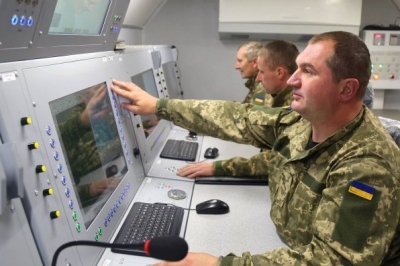
Military assistance is not limited to weapons and ammunition. Intelligence can help a country assess threats, identify possible attack routes and prepare its defences. Satellite communications can also support coordination between military units operating across a large and contested battlefield.
Reuters reported that Ukrainian officials were concerned about possible reductions in American intelligence-sharing. US President Trump, however, has said that intelligence-sharing with Ukraine is continuing. The available reporting therefore points to uncertainty over the future of support, rather than confirmation of a complete cutoff.
Another concern involves Starshield, the military-grade satellite communications system associated with SpaceX’s Starlink technology. Reuters reported that a disruption affected the service and that it had been partially restored. The episode highlighted how reliance on communications infrastructure controlled by external companies can create strategic vulnerabilities during a war.
Subscribe to our newsletter!
For Ukraine, the broader issue is the resilience of its military communications and the ability to maintain operations if access to a particular service is restricted. For other governments, the episode offers a reminder that critical communications infrastructure can have consequences far beyond commercial connectivity when it becomes embedded in national security operations.
These developments do not prove that all American support has ended. They do show why uncertainty over access to intelligence, satellite services and military supplies can have consequences even before a formal policy change is fully implemented.
The US Political Calculation Behind the Dispute
Domestic politics is another important part of the story. The United States is approaching its November midterm elections, and high energy costs have become a political concern. Reuters reported that Trump has linked his frustration with Ukrainian strikes on Russian energy facilities to rising fuel prices, although analysts cited by the news agency attributed much of the wider energy-price pressure to the conflict involving the United States, Israel and Iran and disruptions around the Strait of Hormuz.
This creates a tension between domestic economic priorities and foreign-policy objectives. An administration seeking to reduce fuel costs may explore new sources of supply or adjust sanctions. But decisions that benefit short-term economic goals can also affect diplomatic leverage and the credibility of a broader strategy toward Russia.
The expected economic effect of Russian diesel imports should not be overstated. The Washington Post reported that the proposed volumes represented a relatively small share of US consumption and that any price impact could be limited. The political significance of the arrangement may therefore exceed its immediate effect on fuel prices.
There is also a domestic political counterweight. Some Republican lawmakers continue to support Ukraine and oppose pressure that could force Kyiv into an unfavourable settlement. The dispute is consequently not a simple division between the United States and Ukraine; it also reflects disagreement within American politics over sanctions, military assistance and the terms of a potential peace agreement.
What the Rift Means for Europe
European governments face a strategic challenge if American support becomes less predictable. They have supported Ukraine through military assistance, financial backing and diplomatic pressure on Russia, while some European countries have also helped arrange purchases of US-made weapons for Kyiv.
If Washington reduces intelligence-sharing or limits certain forms of assistance, European governments could face pressure to fill more of the resulting gaps. That would not necessarily be straightforward: replacing sophisticated military capabilities, ensuring adequate ammunition supplies and maintaining intelligence networks require money, time, industrial capacity and coordination.
The dispute could also affect European calculations about long-term defence planning. Governments that rely on US systems may increasingly examine alternative suppliers, additional domestic production and ways to reduce their dependence on services that could be restricted during a political disagreement.
However, it would be premature to conclude that Europe can quickly replace every American capability or that all European governments will adopt the same response. The extent of any shift will depend on decisions made in Washington, the resources available to European allies and developments on the battlefield.
Could the Dispute Undermine Peace Negotiations?
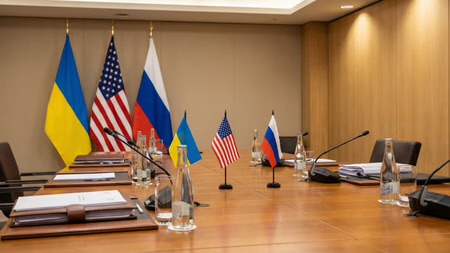
Trump has said he wants the war to end and has continued to engage with both Kyiv and Moscow. Ukrainian officials have also indicated that they remain willing to pursue diplomatic discussions. Yet the latest public confrontation demonstrates how difficult it may be to align the parties’ expectations.
Ukraine wants an end to the war that protects its security and prevents renewed attacks. Russia’s demands and military objectives remain central obstacles to any agreement. The United States, meanwhile, must decide how to balance its diplomatic ambitions with the economic and security tools it can use to influence the conflict.
A reduction in sanctions pressure could potentially create room for economic engagement, but it could also weaken incentives for Moscow to make concessions if Russian leaders conclude that further pressure is unlikely. Conversely, maintaining sanctions alone cannot guarantee a settlement. The outcome depends on the parties’ objectives, battlefield conditions and the credibility of any proposed security arrangements.
The central uncertainty is whether Washington’s current approach will produce meaningful progress toward a durable agreement or deepen mistrust among the countries whose cooperation is necessary to support Ukraine and negotiate an end to the war.
What to Watch Next
Several developments will help determine whether the latest tensions become a temporary diplomatic setback or a more consequential change in US policy.
- Implementation of the sanctions waiver: Further executive actions and official explanations will clarify the scope and duration of the US decision.
- Intelligence-sharing: Statements from Washington and Kyiv, together with credible reporting, will help establish whether the current arrangements change.
- Military and satellite support: Any further restrictions or restoration of services could affect Ukraine’s operational resilience.
- Russian attacks on energy infrastructure: The scale of damage and Ukraine’s ability to restore power will shape the humanitarian outlook as winter approaches.
- European assistance: New commitments on weapons, air defence, energy repairs and financial support will indicate whether European partners can compensate for possible shortfalls.
- Diplomatic engagement: Continued talks among Washington, Kyiv and Moscow will show whether the public confrontation is compatible with progress toward a settlement.
The Bigger Picture
The Trump–Zelenskyy dispute is about more than the relationship between two leaders. It concerns the future of economic pressure on Russia, the reliability of wartime partnerships and the ability of Ukraine to defend its population and infrastructure while pursuing a negotiated end to the conflict.
Washington’s latest sanctions decision has intensified those questions, but it does not settle them. The practical consequences will depend on how the administration implements its policy, whether intelligence and military support remain available, how European governments respond and whether diplomatic engagement produces tangible results.
As winter approaches, the stakes are especially high for Ukrainian civilians who depend on functioning electricity, heating and essential services. For Ukraine’s partners, the challenge is to judge whether current policies are improving the prospects for a lasting peace or increasing the risks facing the country.
For the wider international community, the coming weeks will provide a clearer indication of whether Washington and Kyiv can manage their differences without further weakening the cooperation that has become central to Ukraine’s defence
Stay informed with Simbad Ozibe Blog. Explore more global stories, analysis and developments shaping the world, and join our newsletter for updates.
WATCH NOW!
Stay Ahead. Stay Informed.

Get the latest stories, insights and updates from Simbad Ozibe Blog — covering News, Technology, Business, Finance, Travel, Gaming, Entertainment and more.
Join our growing community and never miss a story worth knowing.