

Education is becoming increasingly digital, but the challenge facing schools is no longer simply whether they can move from paper to software.
Schools have to manage admissions, student records, results, communication, payments, attendance and security. Parents expect faster access to information and more convenient ways to pay school fees. Teachers need better tools to manage students and academic performance. And beyond all of those administrative demands sits the question that ultimately matters most: How can students learn better?
That broader challenge is at the centre of the technology ecosystem being developed by Yusuf Ndola, Founder and CEO of Modernware Solution Ltd.
Through three connected education-focused platforms — CollegeDreams, Penney and LINA — Modernware is addressing different parts of the school experience, from school management and payments to personalised digital learning.
CollegeDreams provides the school-management foundation, Penney focuses on school fees and utility services, while LINA takes the ecosystem further into AI-powered and personalised learning.
The broader vision is to connect these different layers of education technology so that schools can operate more efficiently while parents, teachers and students have better tools throughout the education journey.
Modernware Solution Ltd. at a Glance
| Fact | Details |
|---|---|
| Company | Modernware Solution Ltd. |
| Founder & CEO | Yusuf Ndola |
| Core Focus | Software development, digital solutions and education technology |
| Education Platforms | CollegeDreams, Penney and LINA |
| CollegeDreams | School-management platform designed to digitise and automate key school processes. |
| Penney | School fees & utility platform supporting digital school-fee payments and related services. |
| LINA | AI-powered personalised learning platform focused on curriculum-based learning, assessments, feedback and student progress. |
| School Reach | 100+ schools across the Modernware education ecosystem. |
| Transactions | More than a million transactions processed across the ecosystem. |
| Key Differentiator | The connection between school management and personalised learning, particularly through the integration of CollegeDreams and LINA. |
Modernware’s Bigger Education Technology Vision
Modernware Solution Ltd. describes itself as a Nigerian software development company working across custom software development, mobile applications, payment integration, USSD solutions, POS systems and educational technology.
Its education portfolio takes a specialised approach, with separate platforms addressing different parts of the school experience rather than attempting to place every function inside one application.
The company’s technology and EdTech portfolio identifies CollegeDreams as its school-management platform, Penney as a smart school-payment solution and LINA as an educational technology platform designed to enhance learning experiences.
At the centre of that approach is Yusuf Ndola, whose work through Modernware connects the operational side of schooling with the increasingly important role of technology in how students learn.
The distinction matters because a school is not only an administrative organisation. It is also an environment where teachers teach, parents participate and students develop academically.
CollegeDreams: Building the Digital School
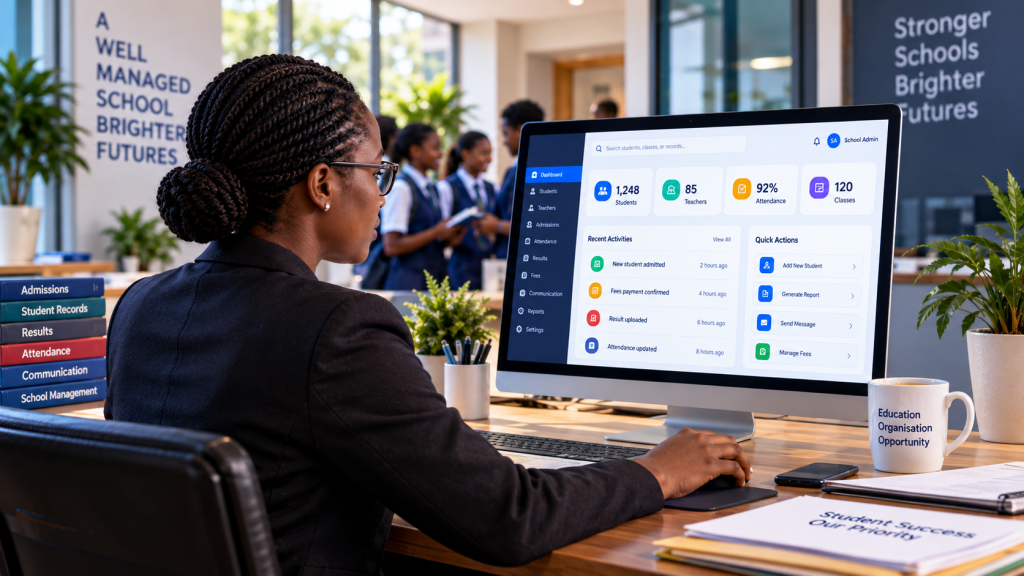
At the foundation of the ecosystem is CollegeDreams, a school-management platform designed to automate many of the processes that traditionally require significant administrative work.
The platform brings together functions including admissions, staff management, result collation, billing, messaging, student security, parent notifications and result verification.
CollegeDreams also presents its service as completely free for schools, while its platform reports more than 36,000 users. These figures are presented directly by the platform.
One of its notable features is QR-based functionality. Parents can scan a QR code associated with a report sheet to initiate school-fee payments, while report sheets can also use QR codes for verification.
The objective is straightforward: reduce manual processes and give schools a central digital environment for managing important information.
The platform also extends beyond the school administrator by connecting institutions with families. CollegeDreams says parents can receive notifications relating to grades, fees, attendance and student entry and exit.
More importantly for Modernware’s wider education vision, CollegeDreams describes its eLearning experience as integrated with LINA and built around the national curriculum.
That connection provides a bridge between the systems used to manage the school and the technology designed to support the individual learner.
Penney: Bringing Payments Into the School Experience
Running a school involves more than academic and administrative processes. Financial transactions are an essential part of the system.
Parents have to pay fees and levies, while schools need organised records of collections, receipts and other payment information.
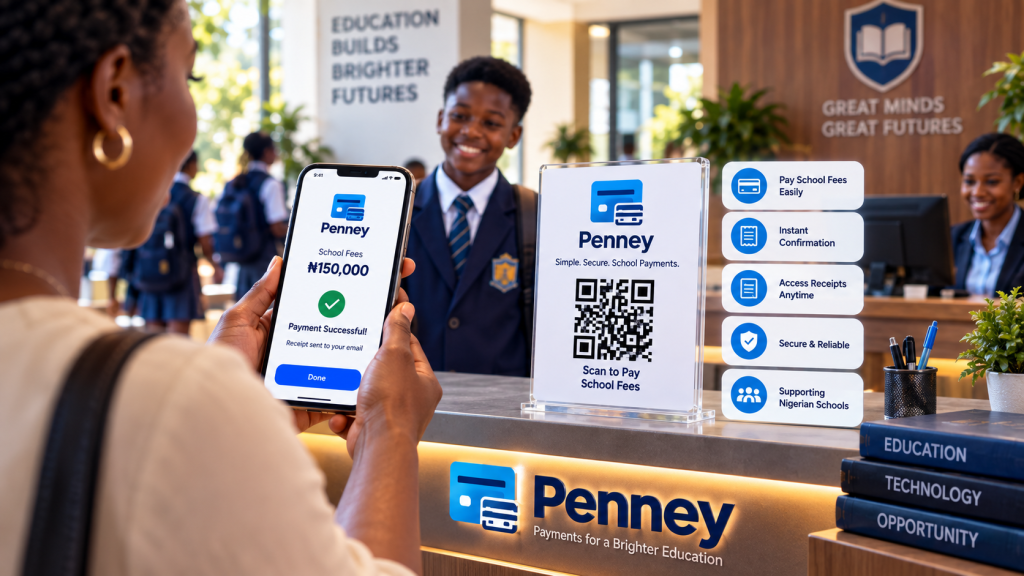
Penney addresses this part of the ecosystem as a school fees and utility platform.
Its services include digital school-fee payments alongside utilities such as electricity tokens, airtime, data and cable television.
For the education story, its school-fee functionality is particularly relevant. Penney says parents can pay tuition and school levies for registered schools, receive payment confirmation and access transaction records and receipts through the platform.
The platform’s wider ecosystem has processed more than a million transactions, demonstrating the scale of the digital payment activity connected to the services it provides.
Within Modernware’s broader education strategy, Penney provides the financial layer while CollegeDreams handles school-management functions and LINA focuses on learning.
Learn more about Penney’s digital payment platform.
LINA: Moving From School Automation to Personalised Learning
But administration and payments are only part of education. The ultimate purpose of a school is learning.
That is where LINA becomes central to the Modernware story.
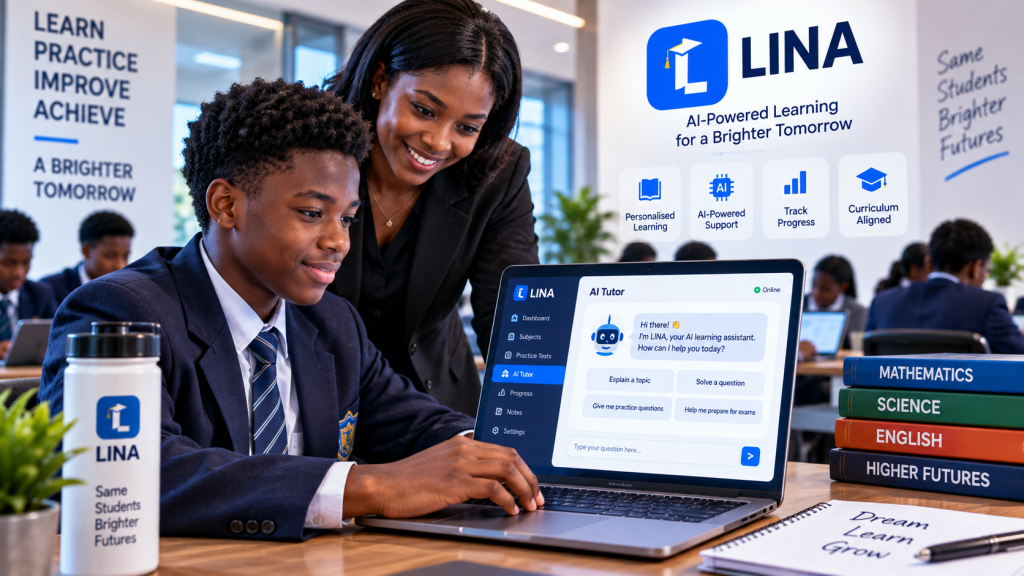
LINA describes itself as an AI-powered learning platform built on the Nigerian curriculum, with a focus on personalised learning, adaptive study paths, assessments, progress tracking and AI-supported academic assistance.
The platform currently says more than 30,000 students are learning through LINA.
Its learning environment includes adaptive learning, AI-powered feedback, WAEC-style practice tests, interactive video lessons, AI-powered e-notes, personalised correctional guides and intelligent chat assistance.
The deeper vision goes beyond simply giving students access to digital lessons. LINA is intended to study how individual students perform, identify areas where they are struggling and use those insights to support a more personalised learning experience.
For example, if a student consistently performs poorly in a particular area, the system can identify that weakness and provide additional learning support around it. Over time, the goal is for the learner’s performance to be tracked so that progress can be understood rather than simply recorded.
That vision also includes sharing useful information about a student’s learning with parents. By providing reports on performance and areas that may require attention, LINA can potentially give families a clearer picture of where a child needs additional academic support.
This is where the relationship between CollegeDreams and LINA becomes particularly important. The combination moves beyond collecting results after an academic period and toward an ecosystem designed to understand performance and support improvement over time.
LINA also says it is available through the web as well as mobile applications, with links to both the Google Play and Apple App Store from its website.
Get Lina on Google Playstore
How CollegeDreams and LINA Work Together
The most important connection within the Modernware education ecosystem is not simply that the company has multiple platforms. It is that CollegeDreams and LINA are designed to work together.
CollegeDreams provides the school-management environment, while LINA extends that environment into personalised learning. CollegeDreams says its eLearning experience is integrated with LINA and built around the national curriculum.
This creates a more continuous relationship between school operations and student development.
Instead of treating academic results as information that is simply collected and stored, the broader vision is to use student performance as an opportunity to understand where a learner may need help.
LINA’s personalised approach is intended to identify weaknesses, provide targeted learning support and track progress. The longer-term vision is that parents can receive meaningful reports that help them understand their child’s academic development and where further support may be useful.
In that sense, the ecosystem is not only about helping a school become more digital. It is about creating a stronger connection between school management, student performance and academic improvement.
Why AI Could Change the Next Stage of Education Technology
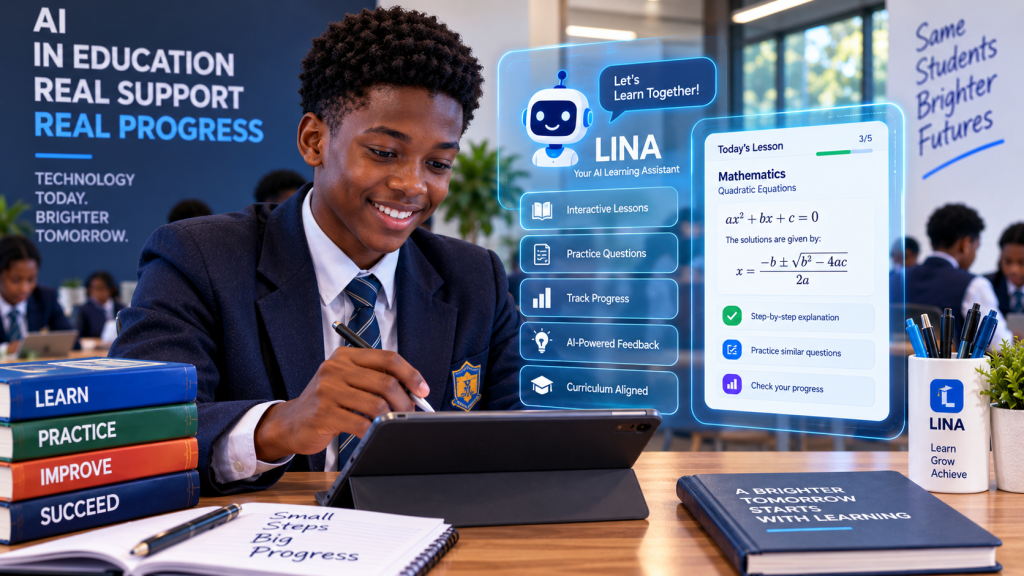
The first major wave of education technology was largely about digitisation.
Paper records became databases. Manual communication became digital notifications. Physical payments moved toward electronic transactions. School results could be generated and accessed through software.
Those changes made school administration more efficient. Artificial intelligence introduces a different possibility: software can increasingly respond to the individual user rather than simply storing information or automating a fixed process.
In education, that could mean identifying areas where a student is struggling, adapting practice questions, explaining concepts differently and helping learners understand their mistakes.
That is the space LINA is entering through its personalised learning and AI-supported tools.
But LINA’s own terms also acknowledge an important limitation: AI-generated material can contain inaccuracies and should not be treated as the sole authoritative source for academic study.
That caveat is important when considering the role of AI in education.
The technology is better understood as an additional support layer rather than a replacement for teachers. Human judgement, classroom context and professional teaching remain important parts of the learning process.
LINA’s own terms similarly state that the platform is a learning support tool and not a substitute for qualified teachers, tutors or academic institutions.
Why Building for the Nigerian Curriculum Matters
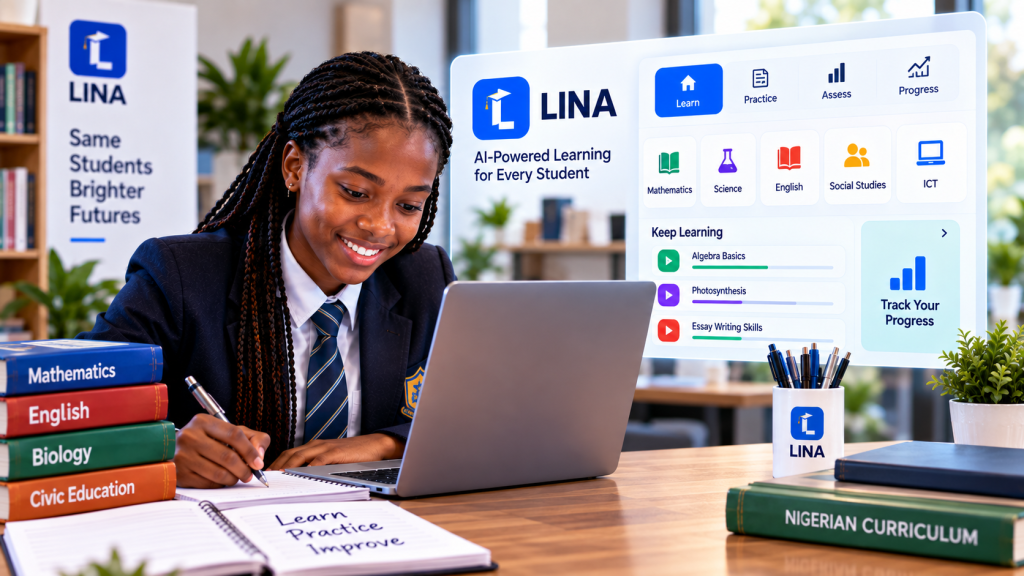
Education technology is not automatically useful simply because it uses advanced technology. The technology has to fit the education system in which it operates.
That makes LINA’s Nigerian curriculum focus particularly relevant.
LINA’s terms describe the platform as supporting Nigerian-curriculum learning for learners aged five and above, while the platform itself highlights curriculum-aligned learning and WAEC-style practice.
That local focus matters because Nigerian students operate within a particular academic environment, with specific curricula, examinations and learning expectations.
Building around those realities gives a local EdTech company an opportunity to address needs that may not be fully covered by generic global learning platforms.
It also creates a responsibility to maintain high standards around academic accuracy, student privacy, child safety and the use of artificial intelligence.
The Bigger Idea: From Digital Schools to Better Student Outcomes
Viewed together, Modernware’s platforms reveal a broader education-technology model.
CollegeDreams addresses the systems that allow a school to operate. Penney addresses school fees and utility services. LINA focuses on the individual learner and personalised academic support.
The important shift is that the ecosystem does not have to stop when a student’s result is recorded.
With CollegeDreams and LINA working together, the wider vision is to move from simply knowing what a student scored to understanding areas where that student may need additional support.
If a learner repeatedly struggles with a particular subject or concept, personalised tools can provide additional practice and guidance. As performance changes, that progress can become part of a longer-term picture that parents and educators can use to support the learner.
That learner-focused approach is an important part of the vision behind Modernware’s education ecosystem: using technology not only to manage schools, but also to help students develop academically over time.
The Opportunity Ahead for Modernware
The education technology market is becoming increasingly competitive, and having multiple products is not enough on its own.
The larger opportunity will depend on whether these technologies continue to provide meaningful value to the people who use them.
For schools, that means reducing administrative workload and improving access to information.
For parents, it means greater visibility into their children’s education and convenient ways to handle school-related payments.
For teachers, it means useful tools that support rather than complicate their work.
For students, it means learning technology that can identify areas of difficulty, provide additional support and help track academic progress.
That final point may become an important measure of how learner-focused education technology develops.
Technology can make a school more efficient. But the deeper promise of EdTech is to support education itself in becoming more personalised, accessible and responsive.
Yusuf Ndola’s Broader EdTech Vision
As Founder and CEO, Yusuf Ndola sits at the centre of Modernware’s broader technology vision.
The company’s education portfolio reflects a progression from digitising institutional processes toward creating technology that can also support individual student development.
That progression is particularly visible in the relationship between CollegeDreams and LINA. The former provides the school-management environment, while the latter is designed to use personalised learning and AI-supported tools to help students work on areas where they need additional support.
The vision goes beyond simply collecting examination results. It is about using information from a student’s learning journey to identify weaknesses, understand progress and give parents and educators more useful insight into how the learner is developing.
Penney completes another part of that broader ecosystem by providing digital infrastructure around school fees and utilities.
Seen from that perspective, the three platforms are not merely a collection of unrelated products. They represent different technological layers around the same education environment.
What the Modernware Ecosystem Could Mean for Nigerian Education
Nigeria’s education system faces complex challenges, and no software platform can solve all of them.
But technology can play a meaningful role in removing unnecessary friction.
Automating administrative processes can give schools more time to focus on education. Digital payment systems can make school-related transactions easier to manage and track. Personalised learning platforms can give students additional academic support.
AI can potentially make that support more responsive by helping technology adapt to individual learning needs.
The combination points toward an education environment in which technology becomes more deeply integrated into the infrastructure of schools and the learning journeys of students.
That is the direction represented by Modernware’s ecosystem: school management through CollegeDreams, school fees and utility services through Penney, and personalised AI-supported learning through LINA.
The broader vision is therefore not simply to add more software to schools. It is to connect technology with the different people and processes that make education work, while giving greater attention to the individual learner.
The Bigger Picture
The story of Modernware Solution Ltd is ultimately about more than three platforms.
It is about an approach to education technology that connects institutional operations with the needs of students and families.
CollegeDreams provides the digital school-management foundation. Penney addresses school fees and utility services. LINA brings personalisation and artificial intelligence into the learning process.
The most distinctive part of the broader vision is the connection between CollegeDreams and LINA — linking school management with a learning environment designed to identify student weaknesses, monitor performance and support academic improvement over time.
For Yusuf Ndola and Modernware, the next chapter will be shaped by how effectively that technology translates into everyday value for schools, teachers, parents and students.
Because the ultimate promise of education technology is not simply that schools can become more digital.
It is that students can receive more personalised support, teachers can work more effectively, parents can stay better informed, and schools can operate with less unnecessary friction.
That is the larger opportunity behind the education technology ecosystem being developed by Yusuf Ndola and Modernware Solution Ltd.
What do you think about Modernware Solution’s approach to education technology? Can connected platforms for school management, payments and AI-powered learning make education genuinely easier and more effective for Nigerian schools, teachers, parents and students?
Share your thoughts in the comments, follow Simbad Ozibe Blog (S.O.B.) for more original technology, education and innovation stories, and join the S.O.B. newsletter for more stories from Nigeria and around the world.
Stay Ahead. Stay Informed.

Get the latest stories, insights and updates from Simbad Ozibe Blog — covering News, Technology, Business, Finance, Travel, Gaming, Entertainment and more.
Join our growing community and never miss a story worth knowing.