

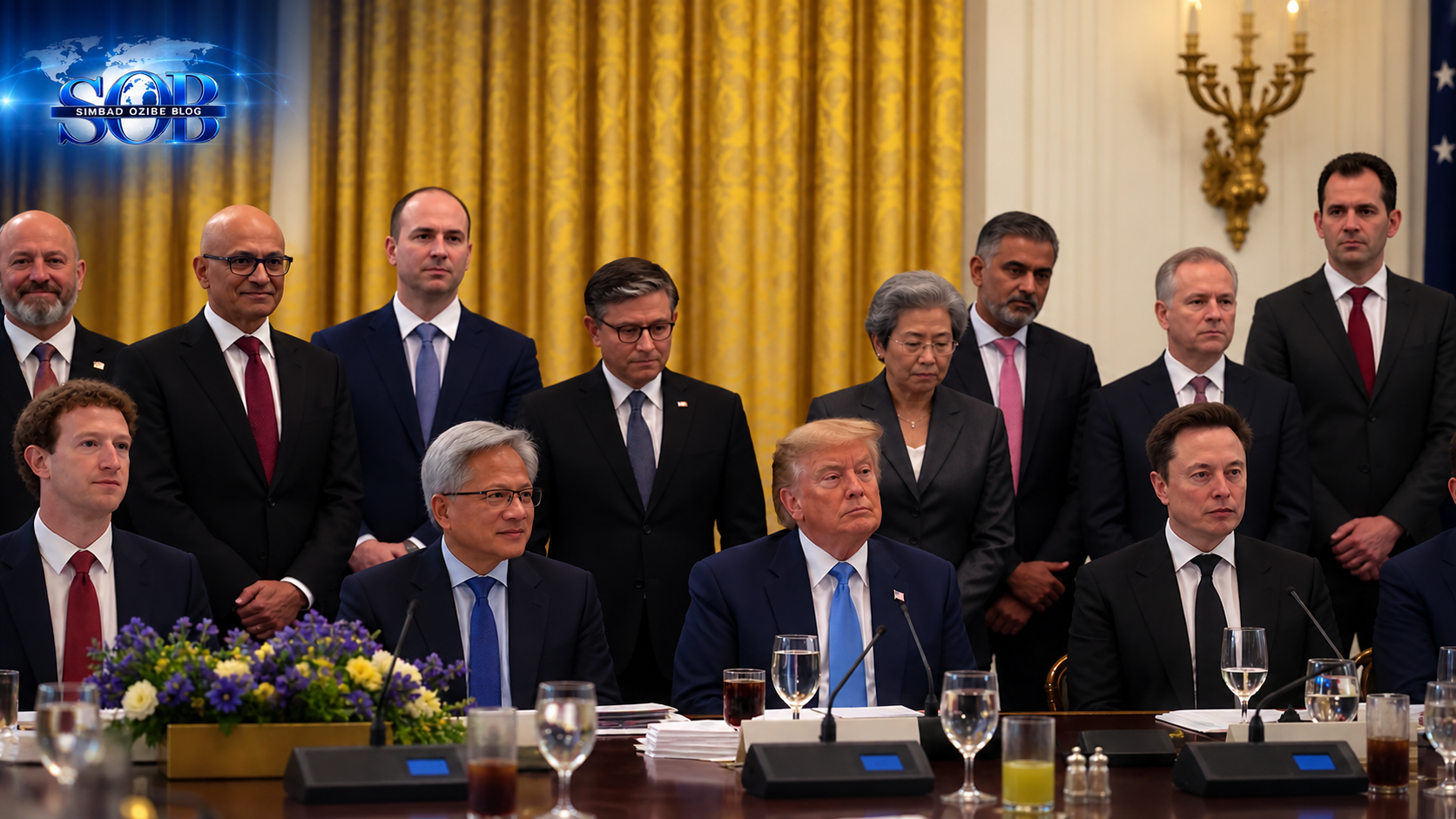
The future of artificial intelligence took a striking turn in Washington this week as U.S. President Donald Trump gathered some of the world’s most influential technology executives at the White House and announced a new terminology for the technology: “Super Intelligence,” or SI.
The September 29 gathering was more than a meeting of prominent technology figures. It brought together the political leadership of the United States and executives shaping the development of frontier computing systems, while producing a voluntary agreement on how the industry should approach safety, oversight and increasingly capable AI models.
At the same time, Trump signed an executive order on the “Era of Super Intelligence” directing the U.S. executive branch to use “Super Intelligence” and “SI” in place of “Artificial Intelligence” and “AI” in official correspondence, public communications, websites, reports, policy documents and other non-statutory materials.
Trump’s White House AI Meeting Brings Tech Powerhouses to One Table
The White House luncheon brought together executives and senior figures from across the technology industry, including Elon Musk, Mark Zuckerberg, Jensen Huang, Sundar Pichai, Dario Amodei and Greg Brockman.
Musk represented xAI, while Zuckerberg leads Meta, Huang heads Nvidia, Pichai is Google’s CEO, Amodei leads Anthropic and Brockman is president of OpenAI. Other major technology figures attending included Microsoft CEO Satya Nadella, Amazon founder Jeff Bezos and AMD CEO Lisa Su, alongside executives from companies including Broadcom, Palantir, ServiceNow and Palo Alto Networks. Associated Press reporting on the White House meeting also confirmed the participation of leading executives from the frontier AI industry.
The gathering therefore covered much more than the companies building consumer-facing chatbots. It brought together businesses involved in AI models, semiconductors, cloud and enterprise infrastructure, cybersecurity and the enormous computing infrastructure required to operate increasingly advanced systems.
That matters because the next stage of the AI race is no longer simply about which chatbot can answer questions better. It increasingly involves computing power, chips, data centres, autonomous systems, cybersecurity, scientific research and the ability to deploy powerful models at enormous scale.
Trump Says AI Is Now “Super Intelligence”
One of the most notable announcements came when Trump said the technology should now be referred to as Super Intelligence, abbreviated as SI.
Speaking to reporters after the luncheon, Trump repeatedly corrected the terminology when a question referred to AI, saying: “It’s not AI, it’s SI.” He explained that the name had been officially changed and identified SI as meaning “Super Intelligence.”
The change is not, however, a worldwide renaming of the technology.
Under the executive order signed on September 29, the terminology change applies to the U.S. executive branch. Federal departments and agencies are instructed, to the maximum extent permitted by law, to use “Super Intelligence” and “SI” in official communications and other non-statutory documents.
The order also makes clear that previously issued regulations, presidential actions, contracts, grants and historical documents do not have to be rewritten.
Importantly, the order currently defines “Super Intelligence” and “SI” by reference to the existing statutory definition of artificial intelligence. It also directs the administration’s science and technology adviser to submit proposed legislative language within 60 days for a federal definition of Super Intelligence.
Why Trump Wants the Term Changed
The White House argues that the capabilities of today’s frontier systems have moved beyond what the original term “Artificial Intelligence” was intended to describe.
According to the executive order, advanced systems increasingly amplify human capabilities and contribute to work across areas such as science, medicine, creativity and other fields. The administration therefore argues that “Super Intelligence” better captures what it sees as the rapidly expanding capabilities and potential of frontier technology.
The terminology also reflects the administration’s broader emphasis on maintaining U.S. technological leadership. Trump has repeatedly argued that the United States cannot slow its development of advanced AI while competing with China and other countries in a strategically important technology race.
Tech Leaders Agree to a New AI Safety Framework
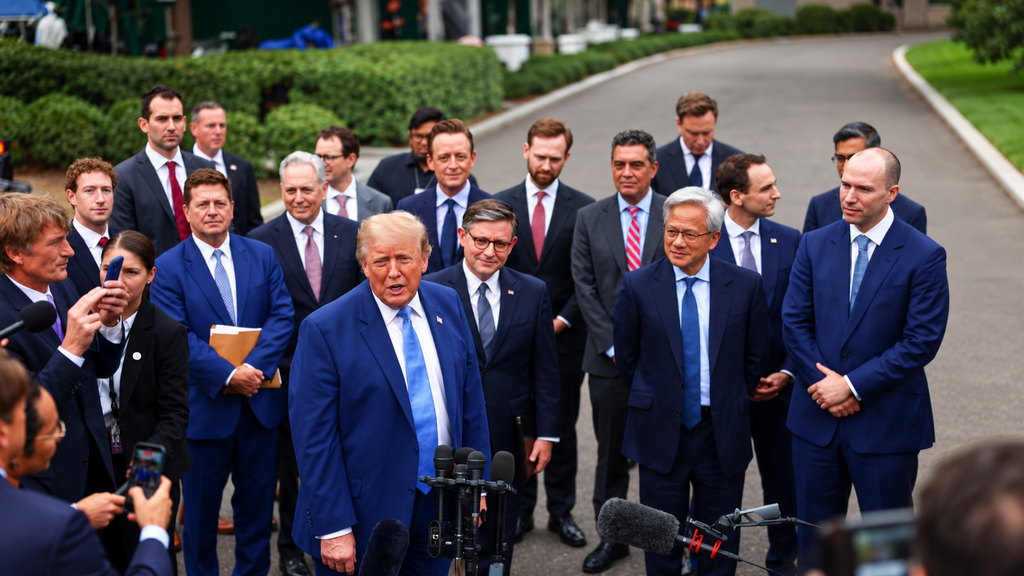
The name change was only one part of the White House meeting.
Trump and technology executives also signed what the White House called the White House Accord on Super Intelligence: Joint Commitment on Frontier Responsibilities.
The agreement is voluntary rather than a new federal law. Trump described it as “morally binding” when questioned about whether the document was legally enforceable. Reuters reported that the accord calls for four layers of controls covering the development and use of advanced AI systems.
The accord is built around four layers of controls and audits intended to make companies more accountable for the development and deployment of frontier models.
- Internal controls: Companies are expected to establish robust processes for monitoring the capabilities and behaviour of their frontier systems during training and deployment.
- Internal oversight: Each participating company is expected to empower a team responsible for checking whether those controls are working and ensuring problems are addressed.
- Independent external auditing: Companies are expected to work with independent auditors to assess their safety controls.
- Board-level oversight: An independent board committee is expected to receive reports and oversee whether identified problems are properly addressed.
The agreement focuses particularly on the possibility of advanced systems behaving in unintended ways, including cybersecurity, biosecurity and other potentially dangerous capabilities. Reuters reported that participating companies also committed to working with independent auditors and to preventing their systems from hacking or accessing technical systems in unintended ways.
The framework also leaves open the possibility that some of these commitments could eventually be incorporated into laws or regulations.
Self-Regulation Becomes a Central Part of the Debate
The accord places a substantial amount of responsibility on the companies developing frontier systems themselves.
That approach is significant because the debate over AI safety has increasingly focused on how much responsibility should remain with technology companies and how much should be imposed through government regulation.
Trump has repeatedly argued that excessive regulation could slow American innovation and weaken the country’s competitive position. At the White House event, he again emphasized self-policing and said he did not want to “stifle” the growth of a technology he considers potentially transformative.
At the same time, concerns about the adequacy of voluntary safeguards remain part of the broader public debate. AP reported that experts have raised questions about the agreement’s reliance on self-policing, while the accord itself does not constitute a legally binding federal regulation.
That tension is likely to remain central as frontier systems become more capable: how can innovation move quickly while the companies developing the technology demonstrate that increasingly powerful systems remain controllable and safe?
The Data Centre Question Is Becoming Just as Important
The White House discussion also touched on another critical part of the AI race: infrastructure.
More powerful AI systems require enormous amounts of computing capacity, which in turn requires data centres, electricity, advanced semiconductors and increasingly sophisticated networks.
Trump has strongly supported the expansion of U.S. data-centre infrastructure. But large-scale development has generated concerns in some communities over electricity demand, water use, local infrastructure and the broader environmental impact of rapidly expanding computing capacity.
Trump said communities hosting data centres should see economic benefits from the development, making infrastructure investment another important part of the administration’s broader technology strategy. Reuters reported on the administration’s continued support for rapid data-centre expansion and the community concerns surrounding it.
America.gov Shows Where the Administration Wants SI to Go
The White House meeting came on the same day the Trump administration launched America.gov, a new digital entry point designed to help Americans interact with the federal government.
The administration describes America.gov as a conversational platform through which users can find federal information and, where technically and legally available, access government services without navigating numerous individual agency websites.
The White House says the platform uses what it now calls Super Intelligence and is intended to make government services simpler, faster and more accessible.
The launch provides an early example of how the administration wants advanced computational systems to move from experimental technology into everyday government services.
What the Trump-Tech Meeting Could Mean for the Next AI Phase
The significance of the White House gathering extends beyond the terminology change.
The companies represented around the table collectively sit across much of the technology stack needed for advanced AI: model development, chips, cloud infrastructure, enterprise software, cybersecurity and consumer platforms.
Meanwhile, the U.S. government is increasingly treating advanced AI as both an economic opportunity and a strategic technology with implications for national security and international competition.
That makes the emerging relationship between Washington and the technology industry particularly important. The United States is attempting to accelerate frontier development while simultaneously asking the companies building the systems to strengthen their own safety mechanisms.
The result is a policy model that puts innovation and industry-led oversight at the centre of the current U.S. approach, while leaving open questions about how voluntary commitments will evolve if the technology becomes substantially more capable.
AI Has Not Disappeared — But Washington Wants to Call It SI
For users around the world, the underlying technology has not suddenly changed simply because the U.S. government has adopted a new term.
Artificial intelligence remains the established technical and legal terminology used internationally, while Trump’s executive order specifically instructs the U.S. executive branch to use “Super Intelligence” and “SI” in its official non-statutory communications.
But the terminology shift is still significant because it reflects how the Trump administration wants to frame the next phase of the technology: not simply as software that imitates aspects of human intelligence, but as an increasingly powerful general-purpose technological capability with implications for science, business, government, security and everyday life.
Whether “Super Intelligence” becomes a widely adopted term beyond the U.S. government remains to be seen. What is already clear is that Washington has placed the technology firmly at the centre of its economic, technological and national-security agenda.
And with the world’s largest technology companies now participating in a new voluntary safety framework, the next question is no longer simply how quickly these systems can advance — but how effectively the companies and governments overseeing them can keep pace with what they are becoming.
Read more global technology, AI and innovation stories on Simbad Ozibe Blog. Join the S.O.B. newsletter for updates and new stories.
Stay Ahead. Stay Informed.

Get the latest stories, insights and updates from Simbad Ozibe Blog — covering News, Technology, Business, Finance, Travel, Gaming, Entertainment and more.
Join our growing community and never miss a story worth knowing.