

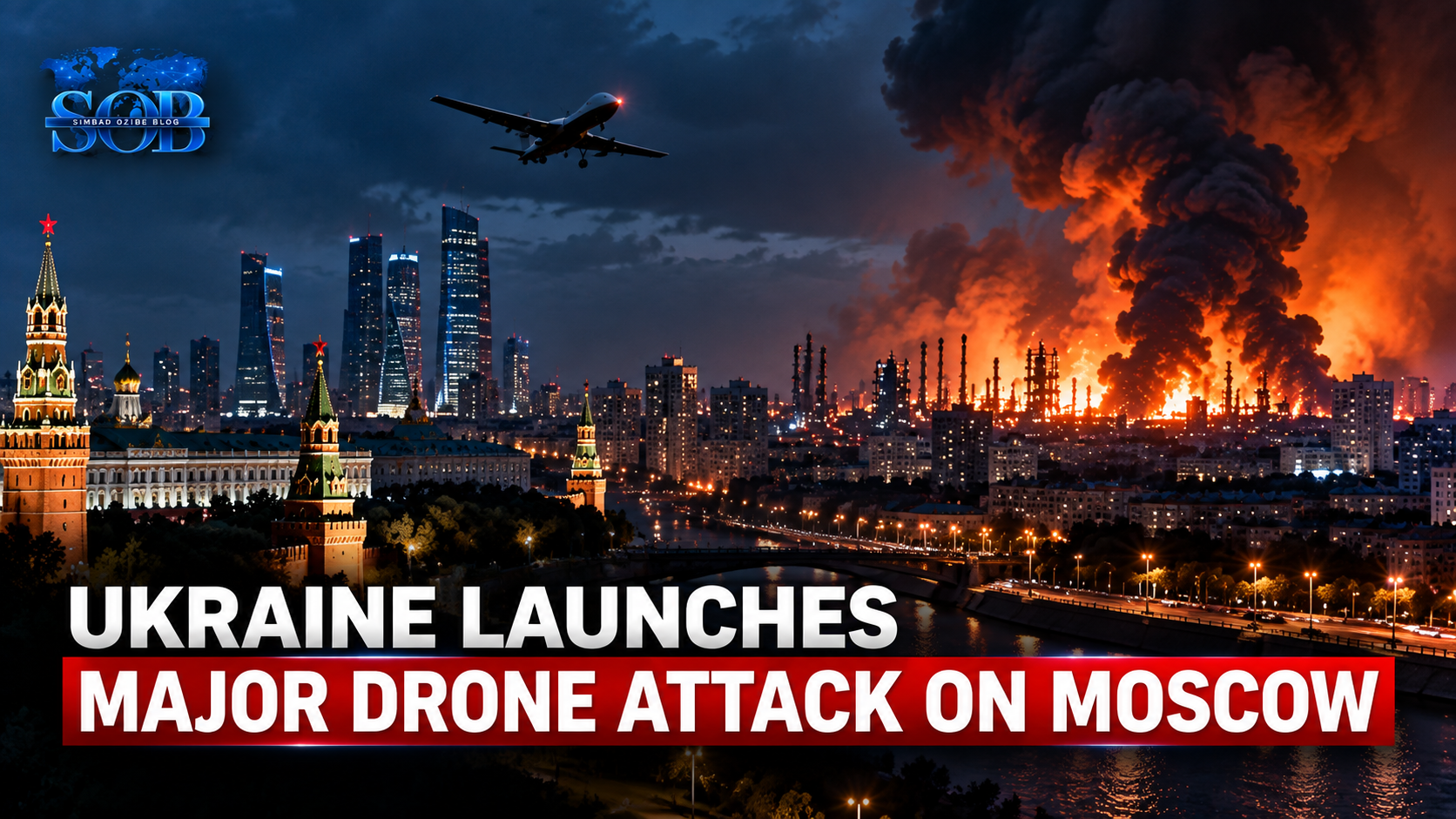
Ukraine launched a major wave of drone attacks against Moscow and the surrounding region on Sunday, as Russia entered the final day of its parliamentary election.
The overnight strikes brought explosions, fires and damage to residential and energy infrastructure around the Russian capital, while Russian authorities reported that hundreds of drones had been intercepted on their way toward Moscow.
The attack unfolded against the backdrop of Russia’s three-day parliamentary vote, adding another layer to an already tense period in the war between Russia and Ukraine.
What Happened in Moscow
Russian authorities described the assault as one of the largest drone attacks against Moscow since the full-scale war began. Moscow Mayor Sergei Sobyanin said Russian air defences had intercepted more than 1,600 drones since Saturday, including around 450 that were heading toward the capital.
Reuters reported that explosions were heard in Moscow and that witnesses saw large columns of smoke rising from the area of the city’s oil refinery. The agency also reported that drones reached the refinery’s premises and that one struck an apartment building.
The precise scale of the damage was still being assessed as the attack developed. Ukrainian officials did not immediately provide a detailed public account of the operation, while Russian authorities continued reporting on the consequences.
According to Reuters’ latest reporting on the attack, the strikes killed at least three people in the Moscow region, while separate deaths were reported in the Russian-held part of Ukraine’s Kherson region.
The Moscow Oil Refinery Was Damaged
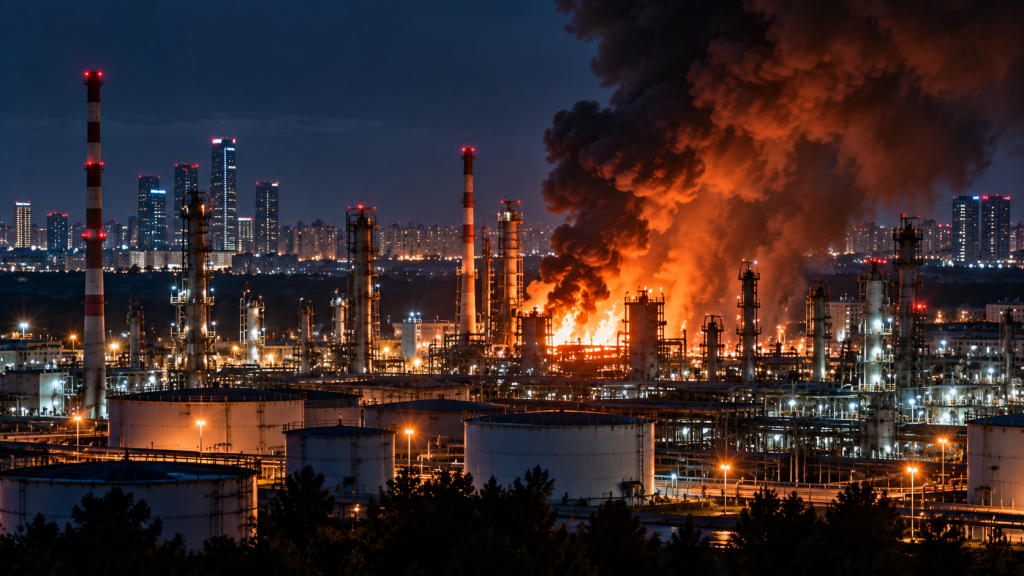
One of the most significant targets affected was the Moscow Oil Refinery, a major industrial facility that has previously been targeted during the war.
Reuters reported that flames and heavy smoke could be seen rising from the refinery area after the attack. The facility processed about 11.6 million metric tons of crude oil in 2024, producing millions of tons of gasoline and diesel, according to the company’s latest available production figures cited in the report.
Ukraine has increasingly used long-range drones to strike infrastructure inside Russia, particularly facilities connected to the country’s energy sector. Kyiv has argued that attacks against such infrastructure can put pressure on the Russian economy and its ability to sustain the war.
Ukraine’s General Staff later said that several units at the refinery had been damaged. Its account identified the Moscow refinery in the Kapotnya district as one of the facilities hit during the overnight operation.
The Ukrainian military’s account was reported by Ukrainska Pravda, which cited the General Staff’s statement. The reported damage has not been independently verified by S.O.B.
Residential Areas Were Also Hit
The attack was not limited to industrial infrastructure.
Authorities in the Moscow region reported damage to residential areas, including an apartment building that was struck during the wave of attacks. Hundreds of residents were evacuated from a 21-storey building in the Ramenskoye district, according to regional authorities.
Reports about casualties changed as officials continued assessing the aftermath. Reuters’ updated account reported three deaths in the Moscow region, while an Associated Press report published during the developing attack initially reported two deaths and 20 injuries across the wider region.
That difference reflects the rapidly developing nature of the incident rather than evidence of two separate attacks. Casualty figures in major strikes can change as emergency services reach affected areas and authorities update their assessments.
The Attack Came as Russians Voted
The timing of the attack is one of the most significant elements of the story.
Russia was holding the final day of its parliamentary election on Sunday, completing a three-day voting period that began on September 18. The election is the country’s first parliamentary vote since Russia launched its full-scale invasion of Ukraine in 2022.
Russian officials said the drone assault was intended to disrupt the election. Moscow Mayor Sergei Sobyanin described the attack as an attempt to interfere with the vote, while saying Russian authorities had prevented that objective from being achieved.
That interpretation comes from Russian authorities and has not been independently established as the motive for the Ukrainian operation.
Ukraine has not publicly confirmed that disrupting the election was the purpose of the attack. Ukrainian President Volodymyr Zelenskyy did, however, say that Ukraine’s long-range strikes had hit important Russian oil and logistics facilities.
Meanwhile, Associated Press reporting on the final day of Russia’s election described the drone offensive as occurring alongside the conclusion of the country’s wartime parliamentary vote.
Russia’s Election Also Faced Cybersecurity Problems
The physical attacks were accompanied by reported disruptions to Russia’s electronic voting infrastructure.
Russian election authorities said online voting systems had experienced cyberattacks during the three-day election. Reuters reported that some Moscow voters encountered technical difficulties with remote voting, while long queues were also observed at some polling locations.
The reported cyber incidents are separate from the physical drone strikes, although both developments unfolded during the same voting period.
Airports Faced Disruptions
Large-scale drone activity around Moscow also affected aviation operations.
Russian authorities periodically restrict flights around the capital when drones are detected in the surrounding airspace. Such measures can create delays, diversions and temporary suspensions as aviation authorities attempt to keep aircraft away from areas considered at risk.
The disruption highlights another consequence of long-range drone warfare: attacks can affect civilian infrastructure far beyond the immediate location where a drone is intercepted or causes damage.
Ukraine Has Not Publicly Commented on the Latest Attack
At the time of reporting, Ukraine had not issued a detailed official explanation specifically addressing the full scale of the latest Moscow attack.
Ukrainian authorities have previously acknowledged or highlighted long-range strikes against Russian military, energy and logistics infrastructure while framing them as part of the country’s broader effort to put pressure on Russia.
In his response to the latest wave of attacks, Zelenskyy said Ukraine’s long-range capabilities had made a significant impact in the Moscow region and pointed to damage involving Russian oil and logistics infrastructure.
Because the conflict involves competing claims from both sides, damage assessments and operational details should be treated cautiously until they can be independently verified.
The Wider War Is Continuing to Hit Energy Infrastructure
The Moscow refinery attack is part of a much broader pattern in the Russia-Ukraine war, in which energy infrastructure has increasingly become a target of long-range strikes.
Oil refineries, fuel depots, logistics facilities and other parts of the energy system have been repeatedly targeted as both sides attempt to disrupt the infrastructure supporting the opposing war effort.
The economic consequences can extend beyond the immediate damage to a facility. Refinery disruptions can affect fuel availability, transportation costs and regional energy markets, particularly when several facilities experience interruptions at the same time.
Recent Associated Press reporting on Russia’s wartime economy has also examined the pressure created by military spending, fuel disruptions and attacks on economic infrastructure.
The Numbers at a Glance
| Development | Reported Details |
|---|---|
| Drone activity | Russian authorities said more than 1,600 drones had been intercepted since Saturday, including about 450 heading toward Moscow. |
| Moscow refinery | A facility at the Moscow Oil Refinery was damaged during the attack. |
| Moscow-region casualties | Reuters’ updated report said at least three people were killed; AP’s earlier account reported two deaths and 20 injuries. |
| Residential impact | Residents were evacuated from a 21-storey apartment building after a reported drone strike. |
| Election timing | The attack occurred on the final day of Russia’s three-day parliamentary election. |
Why This Attack Matters
The significance of the latest attack extends beyond the number of drones involved.
First, the strikes demonstrate the continuing reach of Ukraine’s long-range drone campaign deep inside Russian territory. Moscow remains one of the most politically significant targets in Russia, making any large-scale attack on the capital particularly consequential.
Second, the damage to an oil refinery places energy infrastructure at the centre of the latest confrontation. Russia’s refining network is strategically important both for domestic fuel supply and for the wider economy.
Third, the timing places the attack alongside a major domestic political event in Russia. Russian authorities have linked the strikes to the election, while Ukraine has highlighted the military and economic significance of the facilities it says were targeted.
Those different explanations are important to keep separate. The fact that the attack happened during the election is established; the precise strategic motivation behind the timing remains a matter of competing claims.
What Happens Next
The immediate focus will be on the final damage assessment around Moscow, the condition of the refinery and residential areas, and whether further drone attacks are reported across Russia.
Attention will also turn to the official results of Russia’s parliamentary election and whether the latest attacks produce any additional disruptions to the vote-counting process.
For Ukraine, the latest operation underscores its continued reliance on long-range weapons to strike targets far from the front line. For Russia, it presents another test of its air-defence network and the resilience of critical infrastructure around the capital.
As more information becomes available, casualty figures, infrastructure damage and claims about the operation’s objectives may be revised.
Stay With S.O.B. for Developing Global News
The Moscow drone attack is another reminder of how quickly developments in the Russia-Ukraine war can change, with military operations, energy infrastructure, technology and geopolitics increasingly intersecting.
S.O.B. will continue following the developments as verified information emerges.
Want more major global stories delivered directly to you? Join the S.O.B. newsletter for updates on the stories shaping the world.
What do you think about the latest developments? Share your thoughts in the comments below.
Stay Ahead. Stay Informed.

Get the latest stories, insights and updates from Simbad Ozibe Blog — covering News, Technology, Business, Finance, Travel, Gaming, Entertainment and more.
Join our growing community and never miss a story worth knowing.