
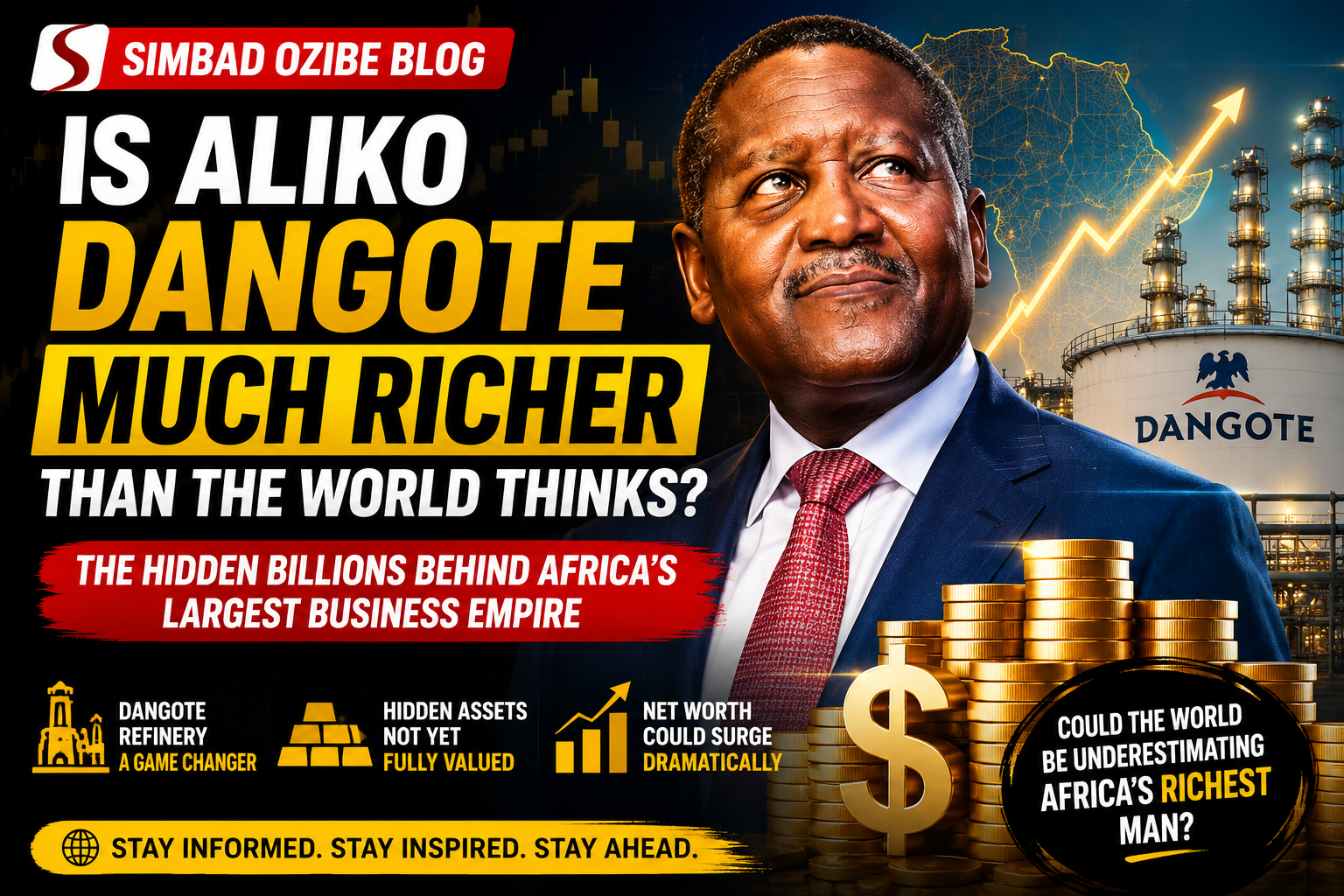
When global billionaire rankings are published each year, one name consistently dominates Africa’s business landscape—Aliko Dangote.
With an estimated fortune running into tens of billions of dollars, the Nigerian industrialist has long been recognized as Africa’s richest person by publications such as Forbes and Bloomberg Billionaires Index.
But according to Dangote himself, those widely quoted figures may tell only part of the story.
The billionaire businessman recently suggested that his actual net worth could be significantly higher than current global estimates because some of his most valuable assets are privately owned and have not yet received full market valuations.
The revelation has reignited conversations across Africa’s financial markets and the global investment community, with analysts arguing that the true value of the Dangote Group may not yet be fully reflected in international wealth rankings.
If those hidden assets are eventually valued through public listings or independent market assessments, experts believe Aliko Dangote’s fortune could increase dramatically—potentially making him one of the wealthiest individuals the world has ever seen.
More importantly, the discussion highlights something much bigger than one billionaire’s personal wealth.
It raises important questions about how privately held companies are valued, why African industrial businesses are often underestimated by international markets, and how one of the continent’s most ambitious industrial projects could reshape global perceptions of African wealth creation.
Current Estimates Put Dangote Among the World’s Richest People
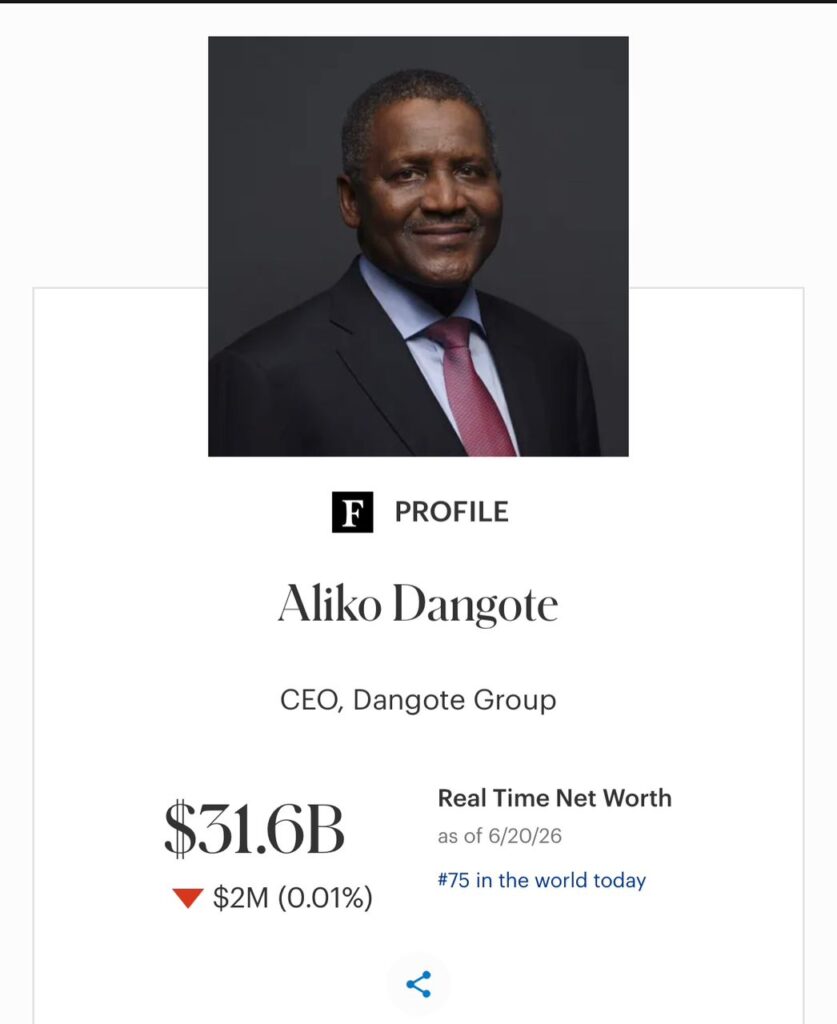
According to the latest rankings published by Forbes, Aliko Dangote remains Africa’s richest man with an estimated fortune exceeding over 30 billion dollars, built largely through his diversified investments in cement manufacturing, sugar refining, salt processing, fertilizer production, logistics, and petroleum refining.
Similarly, the Bloomberg Billionaires Index continues to rank Dangote among the wealthiest individuals globally.
However, both wealth trackers acknowledge an important limitation.
Unlike publicly traded companies whose market values are updated every trading day, privately owned businesses are considerably more difficult to value accurately.
Since much of Dangote’s empire remains privately held, particularly his newest industrial investments, the reported figures may represent only a portion of his true wealth.
This distinction has become increasingly important following the completion of one of Africa’s most ambitious industrial projects—the Dangote Petroleum Refinery.
Why Many Experts Believe Dangote’s Fortune Is Underestimated
The reason behind the growing debate is surprisingly straightforward.
A significant percentage of Aliko Dangote’s wealth is tied to businesses that have never been publicly listed on any stock exchange.
Unlike listed corporations whose values are determined daily by investors, privately owned companies rely on independent valuations, estimated revenues, projected cash flows, asset values, and comparable market analysis.
As a result, their true market value often remains uncertain until investors are given an opportunity to buy shares through an Initial Public Offering (IPO).
Industry analysts believe this is exactly where Dangote’s business empire could experience its biggest transformation.
Among the assets attracting the greatest attention are:
- Dangote Petroleum Refinery.
- Dangote Fertilizer Limited.
- Dangote Petrochemicals.
- Dangote Cement’s expanding African operations.
- Other privately held industrial businesses within the Dangote Group.
Together, these businesses generate billions of dollars in annual economic value while supporting thousands of jobs across multiple African countries.
Yet because several remain privately owned, their complete financial worth has not been fully reflected in global billionaire rankings.
The Dangote Refinery Could Change Everything
No project symbolizes Aliko Dangote’s industrial ambitions more than the massive Dangote Petroleum Refinery.
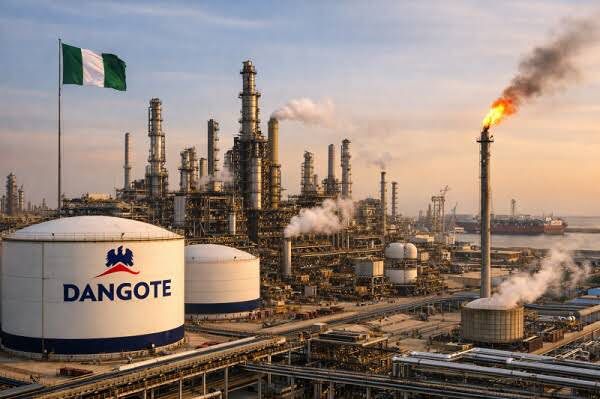
Located in Lagos, Nigeria, the refinery is widely recognized as the largest single-train petroleum refinery in the world.
With a refining capacity of approximately 650,000 barrels of crude oil per day, the facility represents one of the largest private investments ever undertaken on the African continent.
The refinery was designed to reduce Africa’s dependence on imported refined petroleum products while strengthening Nigeria’s energy security, foreign exchange earnings, and industrial development.
Its impact extends far beyond Nigeria.
Economists believe the refinery has the potential to transform fuel supply chains across Africa while positioning Dangote as one of the world’s most influential industrial entrepreneurs.
Several financial analysts have suggested that if the refinery eventually launches an Initial Public Offering, its valuation could rank among the largest corporate listings in African history.
Such a listing would almost certainly have a significant impact on Dangote’s reported net worth.
How Private Companies Can Dramatically Increase a Billionaire’s Net Worth
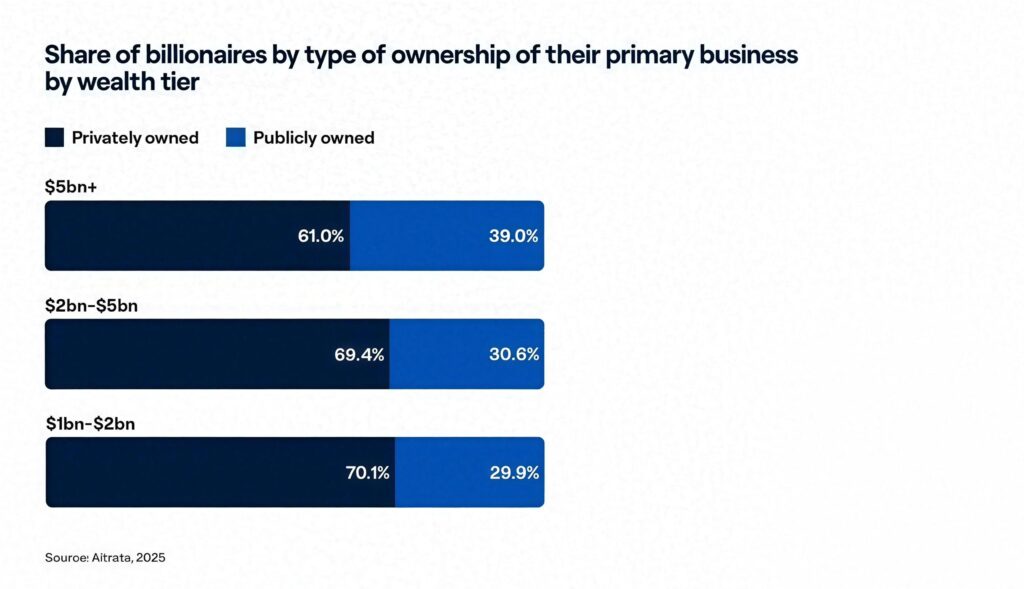
One of the biggest reasons analysts believe Aliko Dangote’s fortune may be underestimated lies in how global wealth is calculated.
Publicly traded companies are relatively easy to value because their shares are bought and sold on stock exchanges every day. Investors determine the market capitalization based on share prices, making it possible for organizations like Forbes and the Bloomberg Billionaires Index to update billionaires’ net worth almost in real time.
Private companies, however, operate differently.
Without publicly traded shares, estimating their value requires financial modeling, revenue projections, asset analysis, debt evaluation, and comparisons with similar publicly listed businesses.
This means the actual value of a successful private company can remain hidden from global rankings until it is listed on a stock exchange or receives an official valuation through private investment transactions.
That is exactly why many investment analysts believe the Dangote business empire still contains billions of dollars in unrealized market value.
The Potential Impact of a Dangote Refinery IPO
Perhaps the most closely watched development is the possibility of a future Initial Public Offering (IPO) for the Dangote Petroleum Refinery.
Although no official listing date has been announced, financial experts continue to speculate that such an event could become one of the largest public offerings in African history.
If investors are eventually allowed to purchase shares in the refinery, the market will determine its true valuation for the first time.
Considering the refinery’s enormous production capacity, integrated petrochemical facilities, and strategic importance to Africa’s energy sector, some analysts believe its valuation could reach tens of billions of dollars.
Should that happen, Aliko Dangote’s ownership stake would immediately become easier to measure, potentially causing a dramatic jump in his reported net worth.
Financial analysts interviewed by several international business publications have noted that IPOs often unlock hidden shareholder wealth because public markets sometimes assign significantly higher valuations than private estimates.
Dangote Fertilizer Is Another Hidden Giant
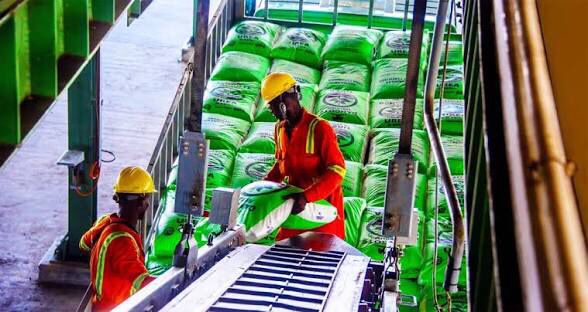
While much attention has focused on the refinery, another major contributor to Dangote’s wealth is Dangote Fertilizer Limited.
The facility is among the largest fertilizer plants in the world and plays a crucial role in supporting agricultural productivity across Africa and beyond.
With increasing global demand for fertilizer products driven by population growth and food security concerns, the business has become one of the Dangote Group’s fastest-growing assets.
Industry experts believe the fertilizer operation alone could command an enormous valuation if it were independently listed on a public exchange.
Combined with the refinery, cement operations, logistics network, and other manufacturing businesses, the total value of Dangote’s industrial empire may be considerably larger than current billionaire rankings suggest.
The Dangote Group: Africa’s Largest Industrial Conglomerate
Founded decades ago as a trading business, the Dangote Group has evolved into Africa’s largest industrial conglomerate.
Today, the company operates across multiple sectors, including:
- Cement manufacturing.
- Sugar refining.
- Salt processing.
- Petroleum refining.
- Petrochemicals.
- Fertilizer production.
- Packaging.
- Logistics.
- Mining.
- Infrastructure development.
Through these investments, the company has become one of Africa’s biggest employers while contributing significantly to Nigeria’s manufacturing sector and export economy.
Its operations span numerous African countries, making Dangote one of the continent’s most influential business leaders.
What This Means for Africa’s Investment Story
Beyond Aliko Dangote’s personal wealth, the discussion highlights an important issue within global finance.
Many African companies remain privately owned, meaning their economic contribution is often far greater than what international financial rankings reflect.
As more African businesses mature, expand internationally, and eventually enter public markets, investors may begin to see a more accurate picture of the continent’s corporate value.
The potential listing of major businesses like the Dangote Refinery could attract billions of dollars in foreign investment while strengthening confidence in African capital markets.
It may also encourage other privately held African companies to pursue public listings, creating new opportunities for investors around the world.
Could Dangote Become One of the World’s Wealthiest People?
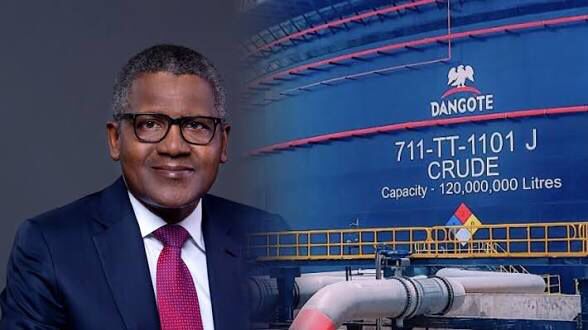
While it is impossible to predict future billionaire rankings with complete certainty, one thing is becoming increasingly clear—Aliko Dangote’s business empire continues to grow at an extraordinary pace.
As the Dangote Refinery ramps up production and more of the company’s industrial assets mature, many analysts believe the market could eventually assign much higher valuations to businesses that are currently privately held.
Should the refinery or other major subsidiaries become publicly listed, the value of Dangote’s ownership stake could increase substantially, potentially reshaping global billionaire rankings.
Some investment experts even argue that current wealth estimates may only represent a fraction of the true economic value controlled by the Nigerian entrepreneur.
Although organizations like Forbes and the Bloomberg Billionaires Index continuously update their calculations as new financial information becomes available, privately held assets remain one of the most difficult components to value accurately.
Dangote’s Vision Goes Beyond Personal Wealth
Perhaps what makes Aliko Dangote’s story remarkable is that his achievements extend far beyond billionaire rankings.
Throughout his career, the Nigerian businessman has repeatedly emphasized industrialization, local manufacturing, and reducing Africa’s dependence on imported goods.
His investments have created tens of thousands of direct and indirect jobs while supporting economic development across multiple sectors.
The Dangote Refinery alone is expected to strengthen Nigeria’s energy independence, reduce fuel import costs, improve foreign exchange earnings, and position the country as a major exporter of refined petroleum products.
Similarly, Dangote Fertilizer continues to support agricultural productivity both within Nigeria and across international markets.
For many economists, these contributions may ultimately prove even more significant than the billionaire rankings themselves.
Why the World Is Watching Africa’s Biggest Industrial Empire
The conversation surrounding Aliko Dangote’s net worth also reflects a broader shift in global investment trends.
International investors are increasingly paying attention to Africa’s rapidly expanding industrial sector, infrastructure projects, technology ecosystem, manufacturing capacity, and growing consumer markets.
As more African companies mature and attract global investment, the continent’s corporate valuations are expected to rise significantly over the coming decade.
The Dangote Group stands at the center of that transformation.
Its success demonstrates that world-class industrial businesses can be built and scaled from Africa while competing on the global stage.
Whether through refining, cement production, fertilizer manufacturing, logistics, or infrastructure development, Dangote’s businesses continue to redefine what is possible for African entrepreneurship.
Final Thoughts
So, is Aliko Dangote much richer than the world currently believes?
Based on the available evidence, it is certainly possible.
Because much of his fortune remains tied to privately owned businesses whose full market values have yet to be realized, today’s billionaire rankings may not fully capture the true scale of Africa’s largest industrial empire.
If the Dangote Refinery and other major assets eventually receive public market valuations through future IPOs or independent investment transactions, the Nigerian billionaire’s reported wealth could rise dramatically.
Regardless of where future rankings place him, one fact remains undeniable:
Aliko Dangote has built one of the most influential business empires in modern African history, transforming industries, creating employment opportunities, and reshaping the continent’s industrial future.
As investors continue watching the next chapter of the Dangote story unfold, the world may soon discover that Africa’s richest man has been even wealthier than many previously imagined.
What Do You Think?
Do you believe Aliko Dangote’s true net worth is significantly higher than current estimates by Forbes and Bloomberg?
Could a future Dangote Refinery IPO completely reshape the global billionaire rankings?
Share your thoughts in the comments below and join the conversation.
Stay connected with Simbad Ozibe Blog for breaking business news, finance insights, technology updates, global investment trends, entrepreneurship stories, entertainment, sports, gaming, travel, and the biggest stories shaping our world.
Don’t forget to bookmark our website and follow us across all social media platforms so you never miss our latest in-depth reports.
You can also watch!
Stay Ahead. Stay Informed.

Get the latest stories, insights and updates from Simbad Ozibe Blog — covering News, Technology, Business, Finance, Travel, Gaming, Entertainment and more.
Join our growing community and never miss a story worth knowing.